Which walking boot do I need, and what size?
Walking boots (also called cam boots or cam walkers) come in two heights. Getting the right height and the right size is the difference between a boot that protects your injury and one that slides around, rubs, and ends up in the closet.
Picked and written by a certified orthotist. This is general information, not medical advice. Your surgeon or provider decides which boot you need and how long to wear it.
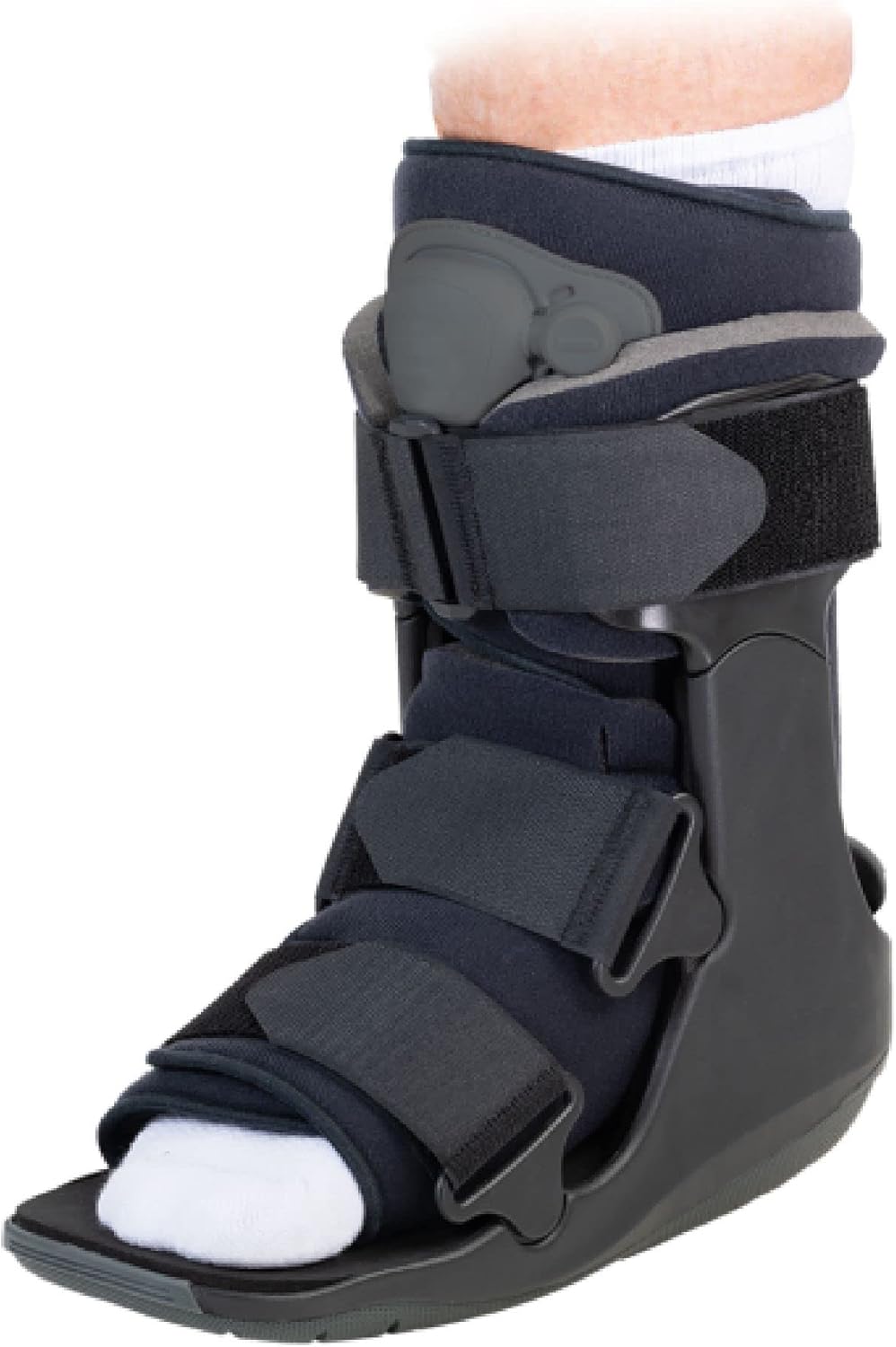
Short Cam Boot (Pneumatic Walking Boot)
Toes to mid-calf. For foot fractures, forefoot or midfoot surgery and minor ankle sprains at or below the ankle.
View Short Cam Boot on Amazon →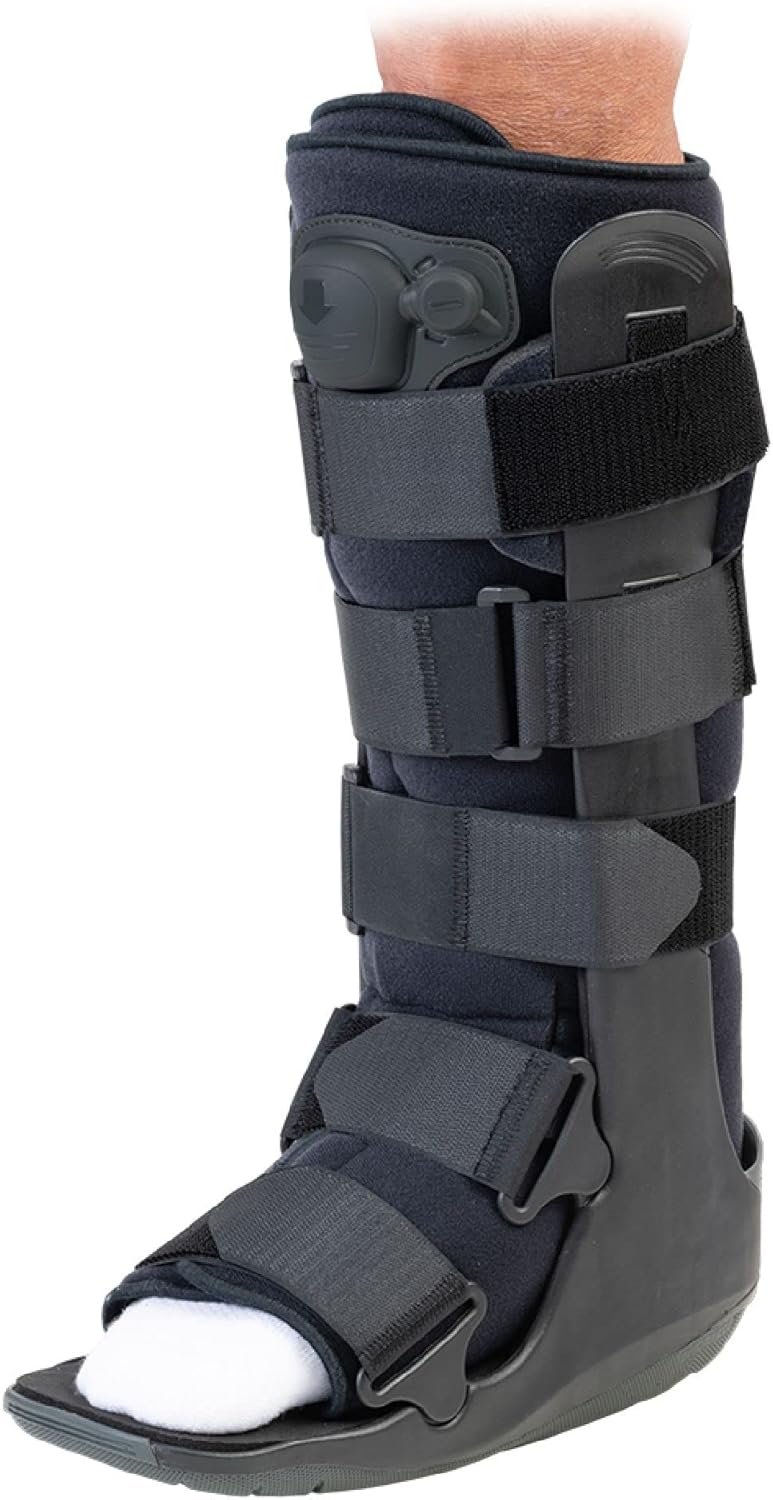
Tall Cam Boot (Pneumatic Walking Boot)
Toes to past mid-calf. For ankle fractures, severe sprains and Achilles repair or rupture recovery.
View Tall Cam Boot on Amazon →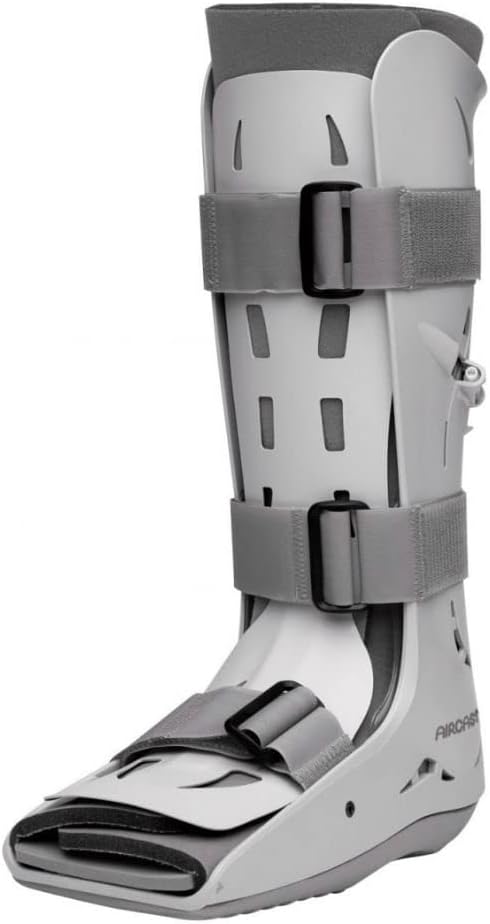
FP Walker (Anterior / Dorsal Protection Boot)
A tall boot with a rigid front shell, for wounds or bad bruising on the front of the leg or top of the foot.
View FP Walker on Amazon →Short boot or tall boot?
The rule of thumb is where the injury sits.
- Short boot (toes to mid-calf): for injuries at or below the ankle, such as foot fractures (metatarsal, midfoot, toe), forefoot or midfoot surgery, plantar plate injuries and minor ankle sprains. It is easier to wear all day and does not dig into the back of the knee when you sit, so it is usually more comfortable for desk work and long days.
- Tall boot (toes to past mid-calf): for injuries at or above the ankle, such as ankle fractures, severe ankle sprains, Achilles tendon repair or rupture, and posterior tibial tendon problems. It gives more control of the ankle and protects soft tissue higher up the leg. It is standard for Achilles patients after surgery.
Both mistakes are common. A tall boot for an injury that only needs a short one is heavier and hotter with no extra benefit. A short boot for an ankle or Achilles injury leaves the tissue higher up unprotected. If you are not sure, confirm the boot height your surgeon wants.
One special case: if you have a wound, dressing or bad bruise on the front of the leg or the top of the foot, a regular boot can press on it. That is what the FP Walker is for. Its rigid front shell bridges the injury instead of pressing on it.
How to pick your size
- Start with your shoe size and check the manufacturer's size chart.
- Between sizes? Go up.
- Check the footbed: it should match your foot length with no more than a finger's width of extra space.
- Check the top of the boot: it should land just below the widest part of your calf. If it digs into the back of your knee when you sit, the boot is too tall for your leg.
- Swelling or a bulky dressing? Size for the foot you have now, with the dressing on, not for your uninjured foot.
Signs the boot is wrong
- Your foot slides inside the boot: it is probably too big. An oversized boot does not hold the injury still.
- The top bites behind your knee when you sit: the boot is too tall, or you may only need the short version.
More walking boot guides