How to put on and wear a walking boot
A walking boot only protects your injury if it is on correctly. Most problems, like rubbing, sliding and an aching hip, come from a few easy-to-fix habits.
Picked and written by a certified orthotist. This is general information, not medical advice. Your surgeon or provider decides which boot you need and how long to wear it.
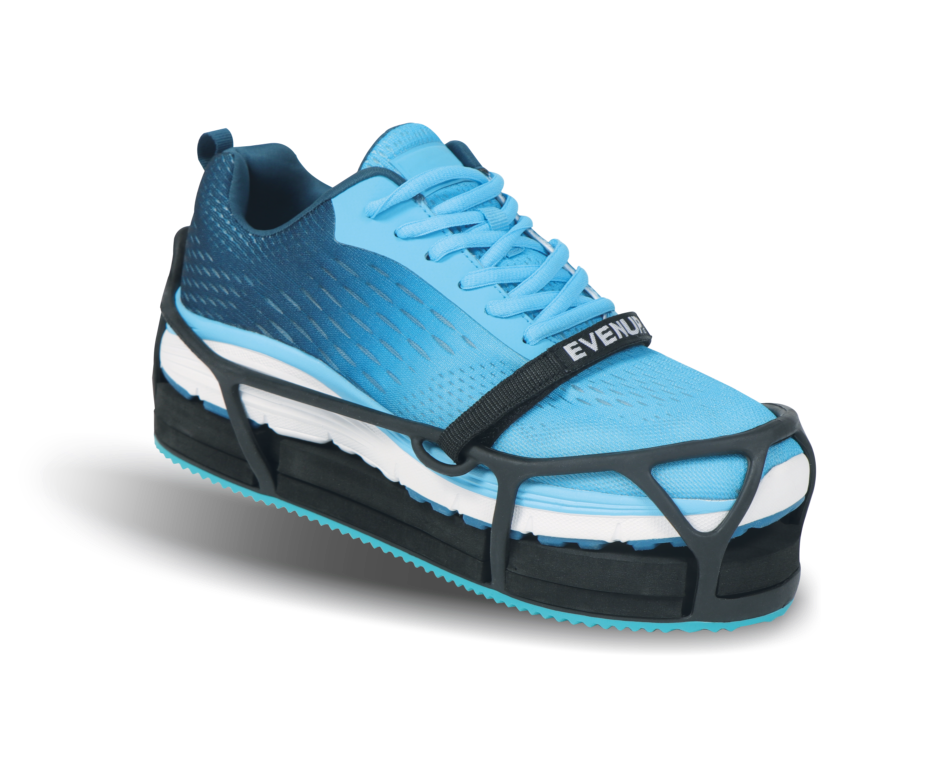
Shoe Lift for Cam Walkers (EvenUp)
Straps onto the shoe on your other foot to level your hips while you wear the boot.
View EvenUp on Amazon →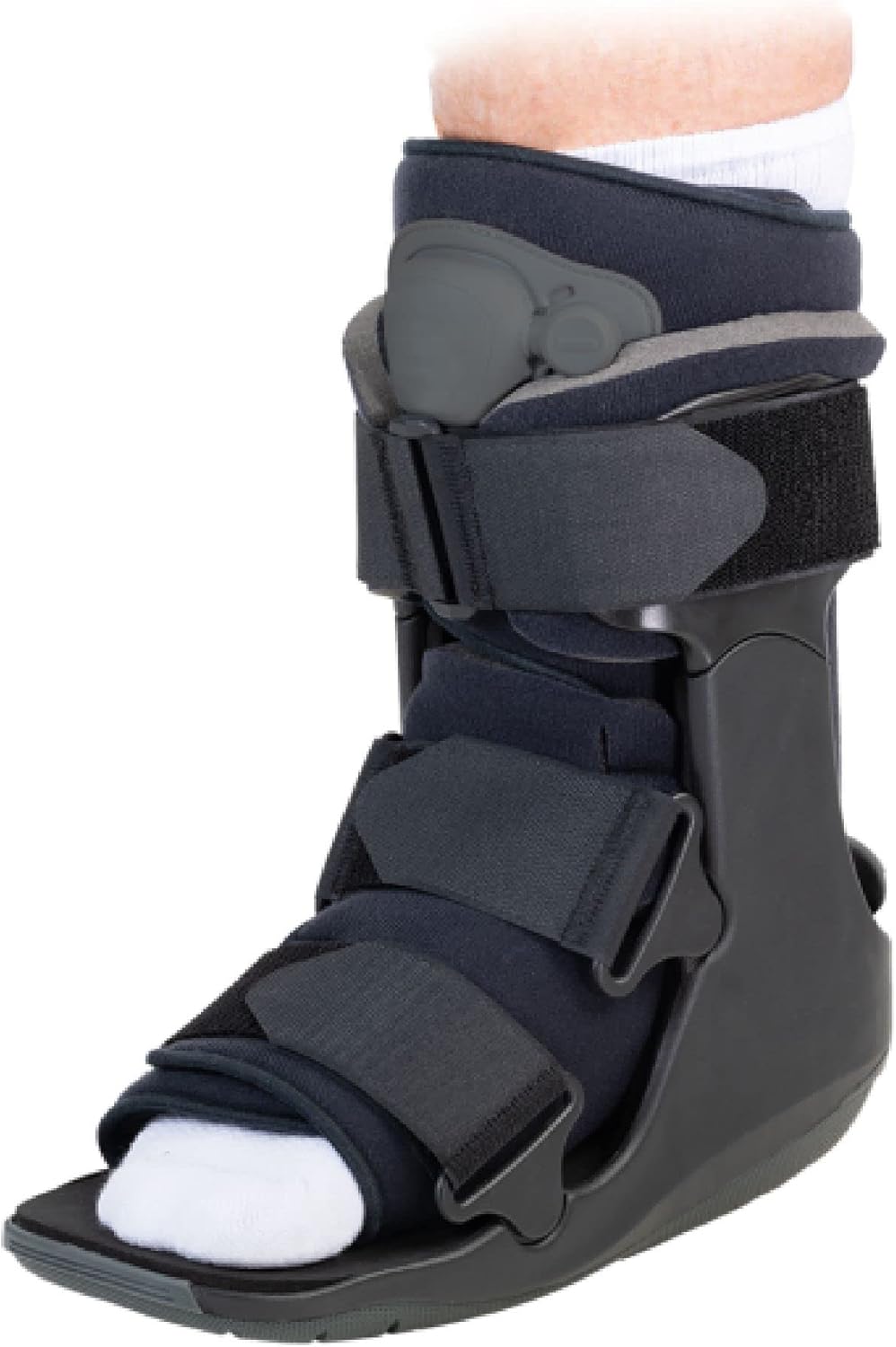
Short Cam Boot (Pneumatic Walking Boot)
Toes to mid-calf. For foot fractures, forefoot or midfoot surgery and minor ankle sprains at or below the ankle.
View Short Cam Boot on Amazon →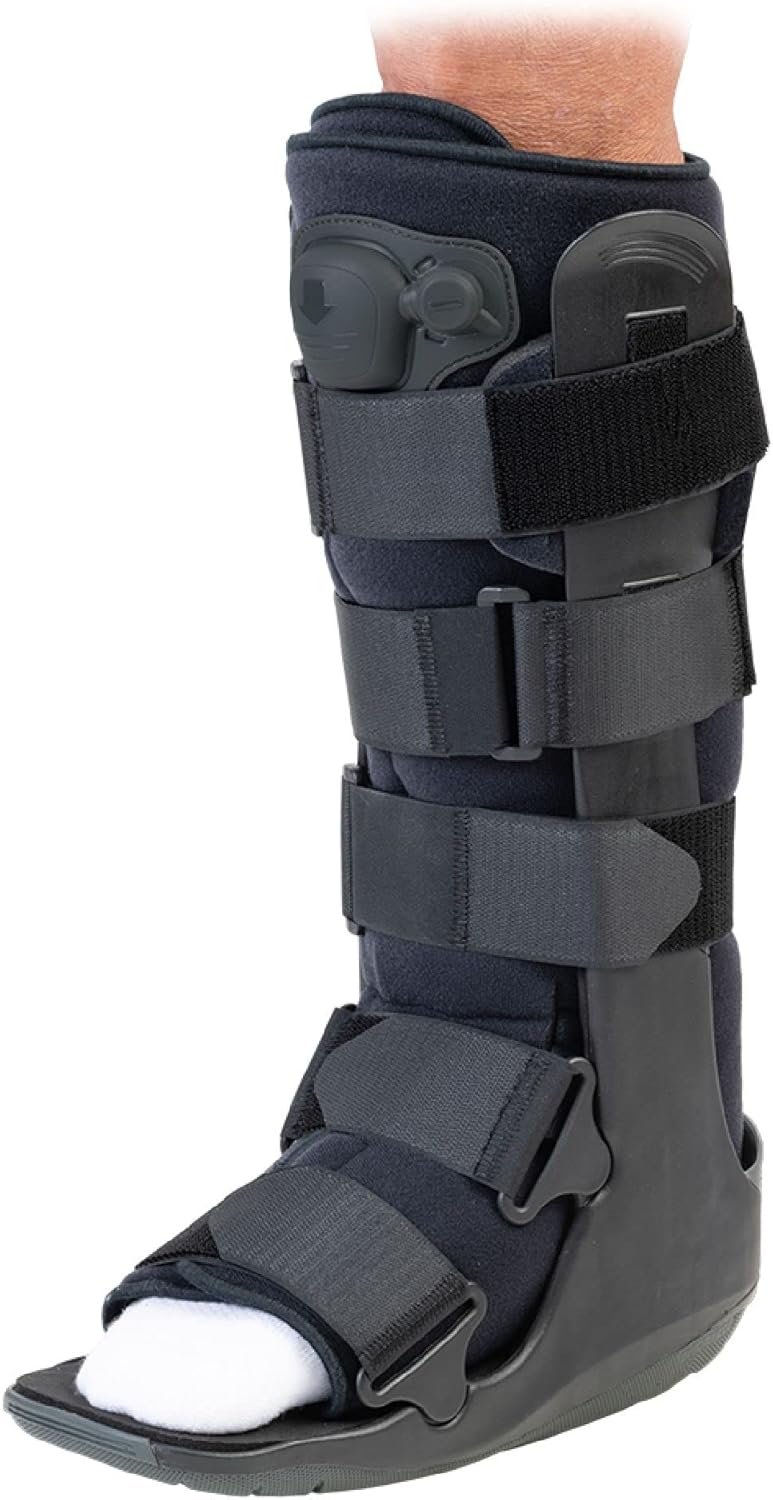
Tall Cam Boot (Pneumatic Walking Boot)
Toes to past mid-calf. For ankle fractures, severe sprains and Achilles repair or rupture recovery.
View Tall Cam Boot on Amazon →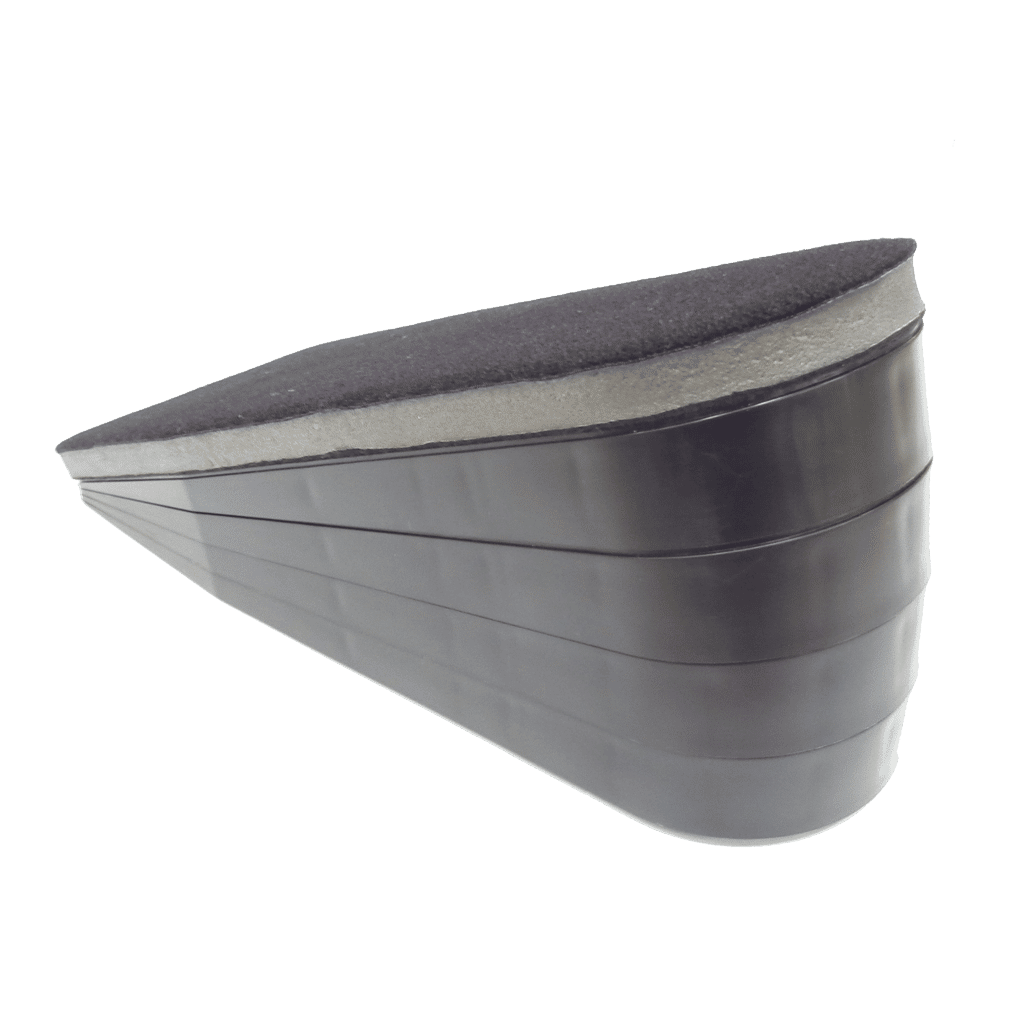
Achilles Heel Wedge
Stackable wedges worn inside the boot after Achilles injury or surgery, only if your surgeon prescribes them.
View Achilles Heel Wedge on Amazon →Putting it on, step by step
- Put on a tall sock that reaches above the top of the boot. Bare skin against the boot edge gets irritated fast.
- Place your foot in the boot and close the soft liner around your foot and leg.
- Fasten the straps from the bottom up, starting at the toes and working toward the calf.
- Pump up the air bladder (if your boot has one) until it feels snug but not tight.
- Put a shoe lift on the other foot so your hips stay level (see below).
The air bladder matters
Walking without inflating the air bladder leaves your leg loose inside the shell, which defeats the point of the boot. Snug, not tight, is the goal.
Level your other foot
A walking boot adds about 1.5 to 2 inches of height to the booted leg. Walking lopsided all day strains your back and hip, and that ache is one of the main reasons people stop wearing the boot. A shoe lift like the EvenUp straps onto the shoe on your other foot and closes most of that gap. The tall boot adds even more height than the short one, so the lift matters even more.
Read more in walking boot hurting your hip or back?
After Achilles surgery
Your surgeon may have you wear stacked heel wedges inside the boot for the first weeks. Use the height your provider prescribes and remove one wedge at a time, about every 1 to 2 weeks, as you heal. Taking them out too fast, or all at once, puts a sudden stretch on the healing tendon.
Common mistakes
- Walking with the air bladder flat.
- Tightening the top straps first, or not fastening all the straps.
- Wearing a short sock, so the boot edge rubs bare skin.
- Skipping the lift on the other foot, then quitting the boot because of hip or back pain.