Foot & Ankle
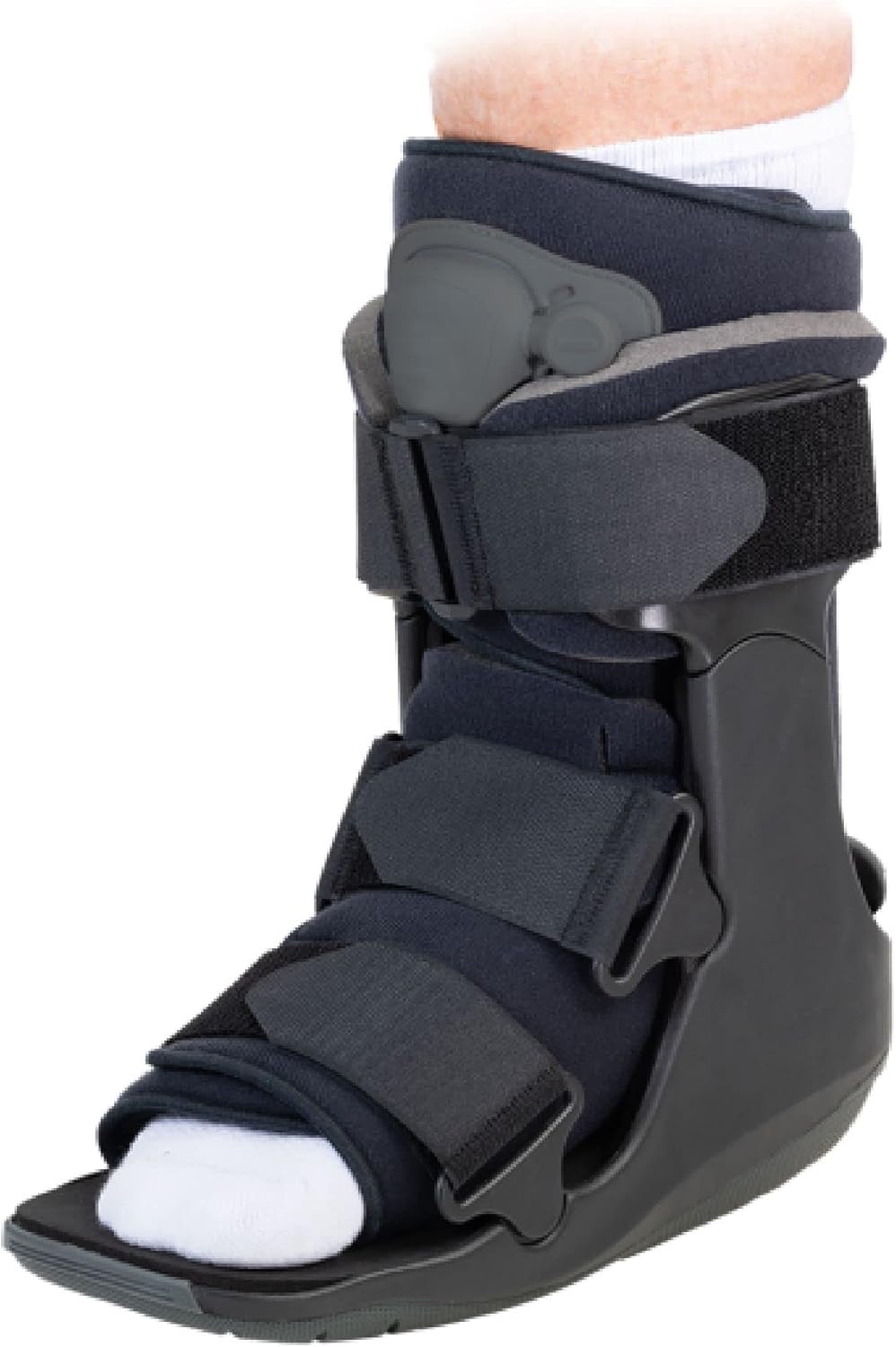
Short Cam Boot (Pneumatic Walking Boot)
For foot fractures (metatarsal, midfoot, toe), forefoot or midfoot surgery, plantar plate injuries, and minor ankle sprains where the injury sits at or below the ankle. The short cam boot extends from the toes up to mid-calf — high enough to immobilize the ankle but low enough that it doesn't dig into the back of the knee when sitting. Generally more tolerable for desk work and long days than the tall version.
Sizing Guide
Sized by shoe size. Check the manufacturer's chart. If between sizes, go up. The footbed should match your foot length with no more than a finger's width of extra space. The boot top should land just below the calf muscle — if it digs into the back of the knee when you sit, the boot is too tall (try a different shoe-size grade or confirm you actually need a tall boot).
Tips & Tricks
Pump the air bladder until snug but not tight. Tighten straps from bottom to top. Wear a tall sock that covers above the boot top to prevent skin irritation. Pair with an EvenUp shoe lift (on the Shoes & Shoe Accessories page) on the opposite foot to keep your hips level — the cam boot adds 1.5"-2" to your stance height, and walking unbalanced strains the back and hip.
Common Mistakes
Buying a tall cam boot when a short one would do — taller boots are harder to wear all day and bind at the back of the knee when sitting. Buying oversized is the second most common error — an oversized boot slides and doesn't immobilize. Walking without inflating the air bladder leaves your limb loose inside the shell, which defeats the immobilization. Skipping the EvenUp on the other foot causes the hip-and-back ache that knocks compliance off.
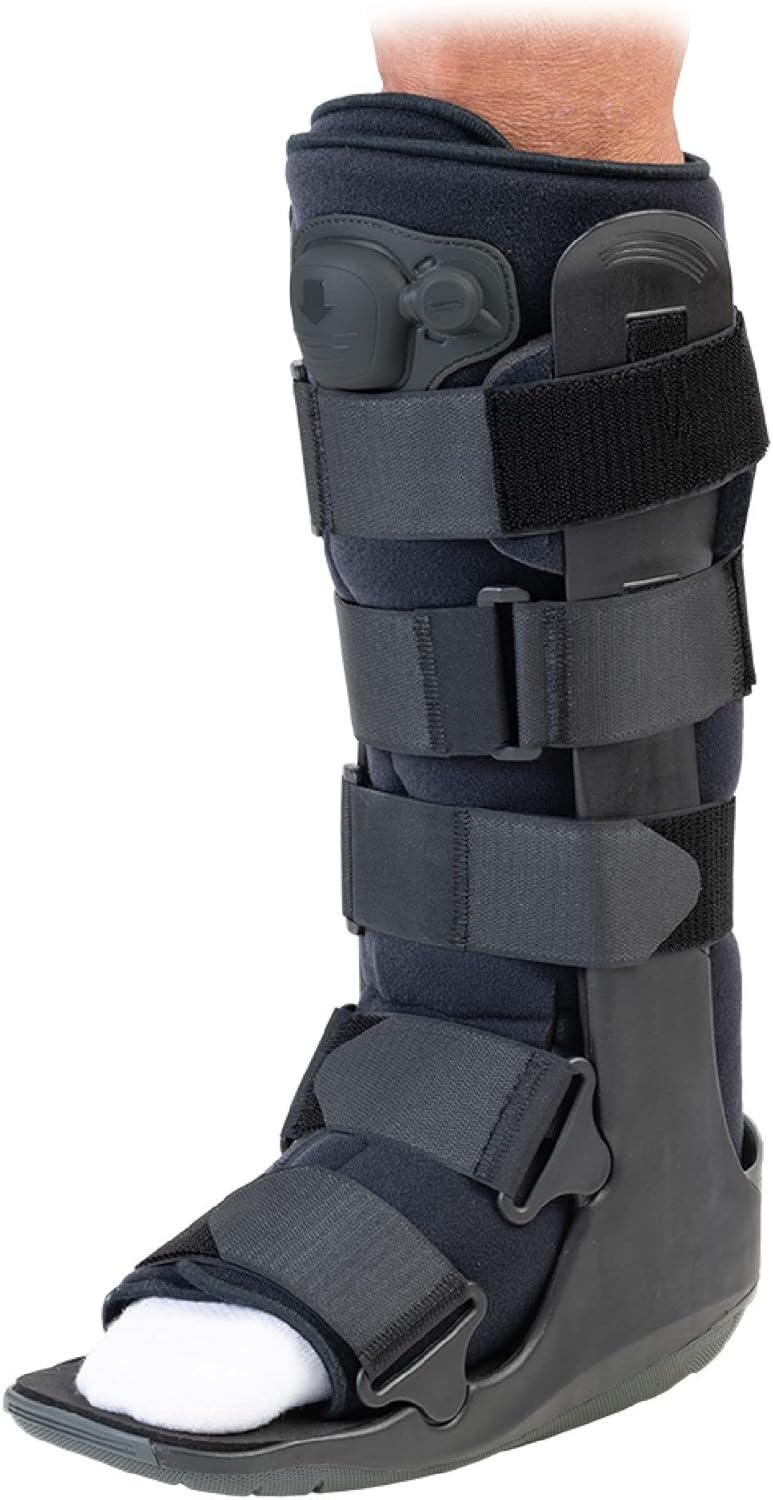
Tall Cam Boot (Pneumatic Walking Boot)
For ankle fractures (distal tibia/fibula), severe ankle sprains, Achilles tendon repair / rupture recovery, posterior tibial tendon dysfunction, and any injury that sits at or above the ankle and needs control of the lower leg as well as the foot. The tall cam boot extends from the toes up past mid-calf, providing more rigid control of the ankle joint and protecting injured soft tissue further up the leg. Standard issue for post-op Achilles patients.
Sizing Guide
Sized by shoe size. Check the manufacturer's chart. If between sizes, go up. The footbed should match your foot length with no more than a finger's width of extra space. The boot top should land below the calf's widest point so the upper straps can anchor above the calf muscle belly — if the boot is too tall for your leg, the top digs in behind the knee when you sit. Try the short version above if the tall boot doesn't fit your leg length.
Tips & Tricks
Pump the air bladder until snug but not tight. Tighten straps from bottom to top. Wear a tall sock that covers the top of the boot for skin protection. Pair with an EvenUp shoe lift (on the Shoes & Shoe Accessories page) on the opposite foot — the tall boot adds even more height than the short, so hip-leveling matters more. For Achilles patients, your surgeon may direct you to use stacked heel wedges (see below) inside the boot during the first weeks; remove one wedge per week as healing progresses.
Common Mistakes
Wearing a tall boot for an injury that only needs short-boot control — it's heavier, hotter, and more uncomfortable than the short version, and there's no clinical benefit. The reverse is also a mistake: a short boot for an ankle or Achilles injury leaves the proximal soft tissue unprotected. Confirm the boot height your surgeon wants. Skipping the EvenUp causes hip and back ache that becomes the reason patients abandon the boot. Walking without inflating the air bladder leaves the limb loose inside the shell.
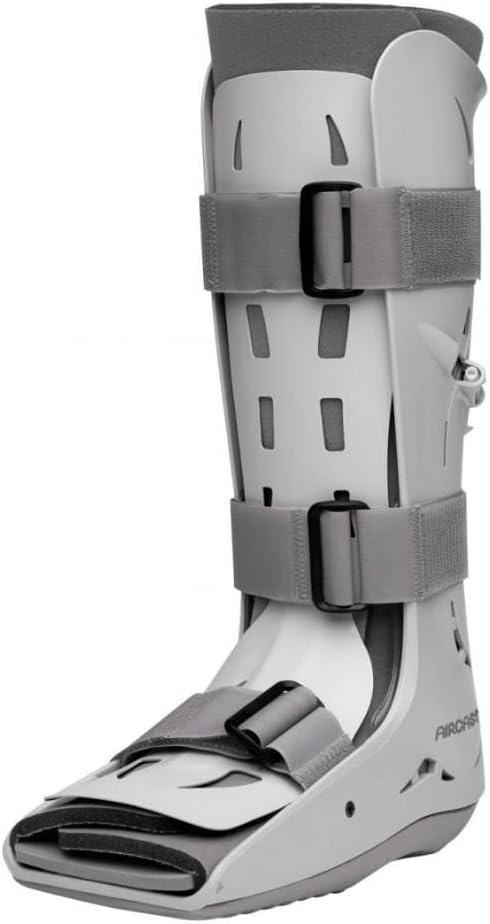
FP Walker (Anterior / Dorsal Protection Boot)
For injuries that need not just immobilization but PROTECTION of the front (anterior) of the lower leg and the top (dorsum) of the foot — crush injuries, post-debridement wound care on the anterior tibia or dorsum, severe contusions, or any case where pressure or contact on the front of the leg/foot would damage healing tissue. The Aircast FP Walker has a rigid anterior shell that protects the dorsum + anterior leg from external contact, unlike standard cam boots that wrap around the back of the leg with the front of the foot relatively exposed.
Sizing Guide
Sized by shoe size. Check Aircast's chart. The dorsal/anterior shell needs enough clearance over any wound dressing or swelling — don't size based on uninjured-foot measurement alone if there's significant swelling or a bulky dressing. Tall design; the top of the shell should land just below the calf's widest point so the upper strap anchors above the calf muscle belly.
Tips & Tricks
The FP Walker is what we reach for when a patient needs a cam boot AND the dorsum or anterior leg has a wound or contusion that can't tolerate pressure. Tighten straps from bottom to top, leaving the anterior shell sitting freely over the wound — the shell should bridge the injury, not press on it. Pair with EvenUp on the opposite foot for hip leveling. If wound care requires daily dressing changes, the boot's modular design lets you remove the front shell for access.
Common Mistakes
Using a standard cam boot when the patient actually needs anterior protection — pressure or contact on a healing wound or contusion can re-injure or delay healing. Conversely, using the FP Walker for a routine ankle fracture is overkill; a standard tall cam boot is simpler and lighter. Confirm with the surgeon what level of anterior protection the injury actually needs.
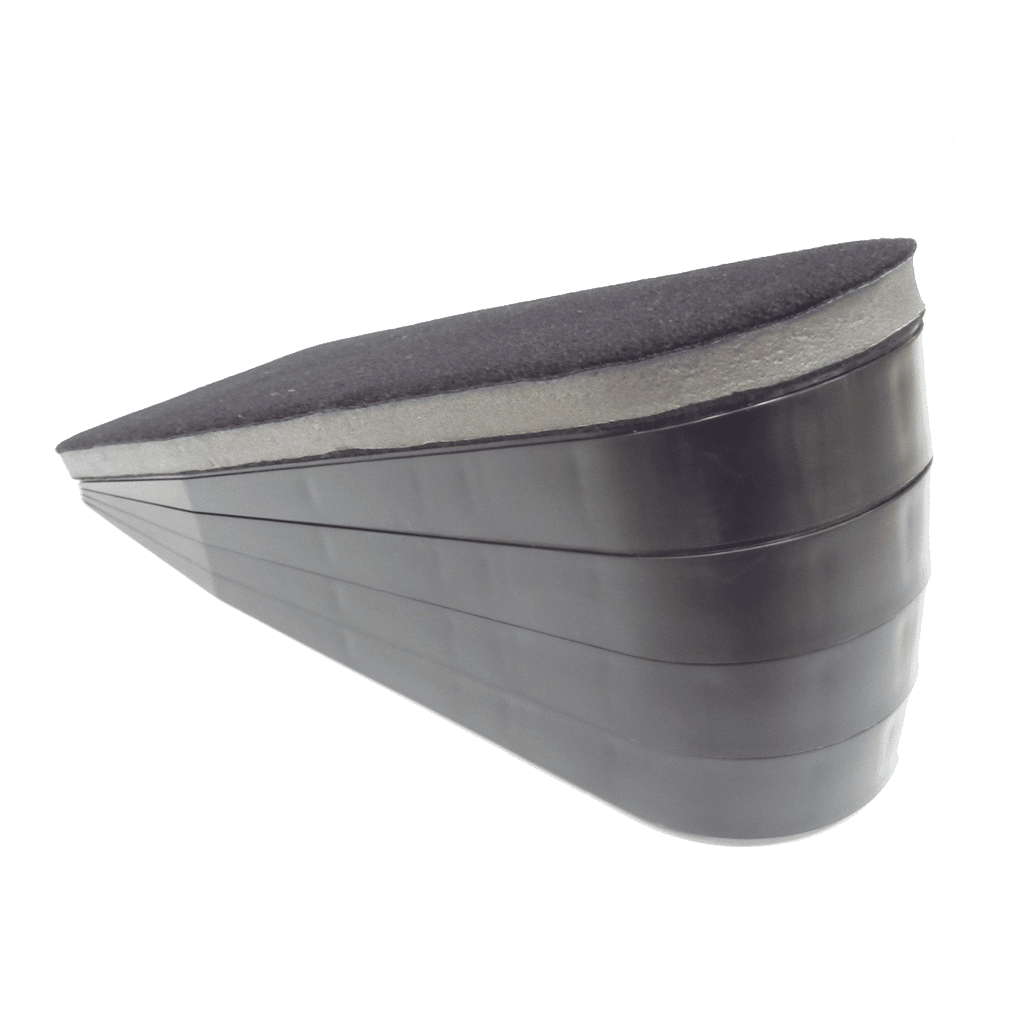
Achilles Heel Wedge
For Achilles tendonitis, Achilles tendon rupture recovery, and post-surgical Achilles repair. Worn inside a cam boot or shoe to reduce stretch on the Achilles tendon.
Sizing Guide
Most heel wedges come as a stackable set with 2 to 4 layers of equal thickness (typically 1/4 inch each). One size generally fits adult shoe sizes. Choose sets that include adhesive backing for use inside shoes, or rigid wedges designed to drop into a cam boot.
Tips & Tricks
Start with the highest stack your provider prescribes (often 1 to 1.5 inches of lift) and remove one wedge every 1 to 2 weeks as healing progresses. If wearing inside a cam boot, both feet need lift adjustment — wear an EvenUp on the other shoe to level your hips. Always use wedges in both the booted foot and the regular shoe symmetrically when possible.
Common Mistakes
Removing the wedges too quickly can re-injure the Achilles tendon. Removing them all at once instead of one at a time creates a sudden stretch on healing tissue. Skipping the lift on the non-booted side leaves your hips unlevel and can cause back pain.

Plantar Fasciitis Night Splint
For plantar fasciitis, Achilles tendonitis, and morning heel pain. Holds the foot in a gentle stretch while you sleep so the plantar fascia heals in a lengthened position.
Sizing Guide
Sized by shoe size and calf circumference. Match to the manufacturer's chart. The splint should cover from just below the knee to the ball of the foot. Choose between rigid boot-style splints or soft sock-style splints based on your comfort preference.
Tips & Tricks
Wear at night during sleep. The splint holds the ankle at 90 degrees or slightly past, gently stretching the plantar fascia and Achilles. The goal is to reduce the morning "first step" pain by preventing the tissues from tightening overnight. Build up wear time gradually — start with a few hours and work up to a full night if needed.
Common Mistakes
A splint that forces the foot into too much dorsiflexion is uncomfortable and may wake you up. The angle should be a gentle stretch, not painful. Soft sock-style splints are usually more comfortable for long-term overnight wear than rigid boots. Walking around in the splint can cause falls — only wear in bed.
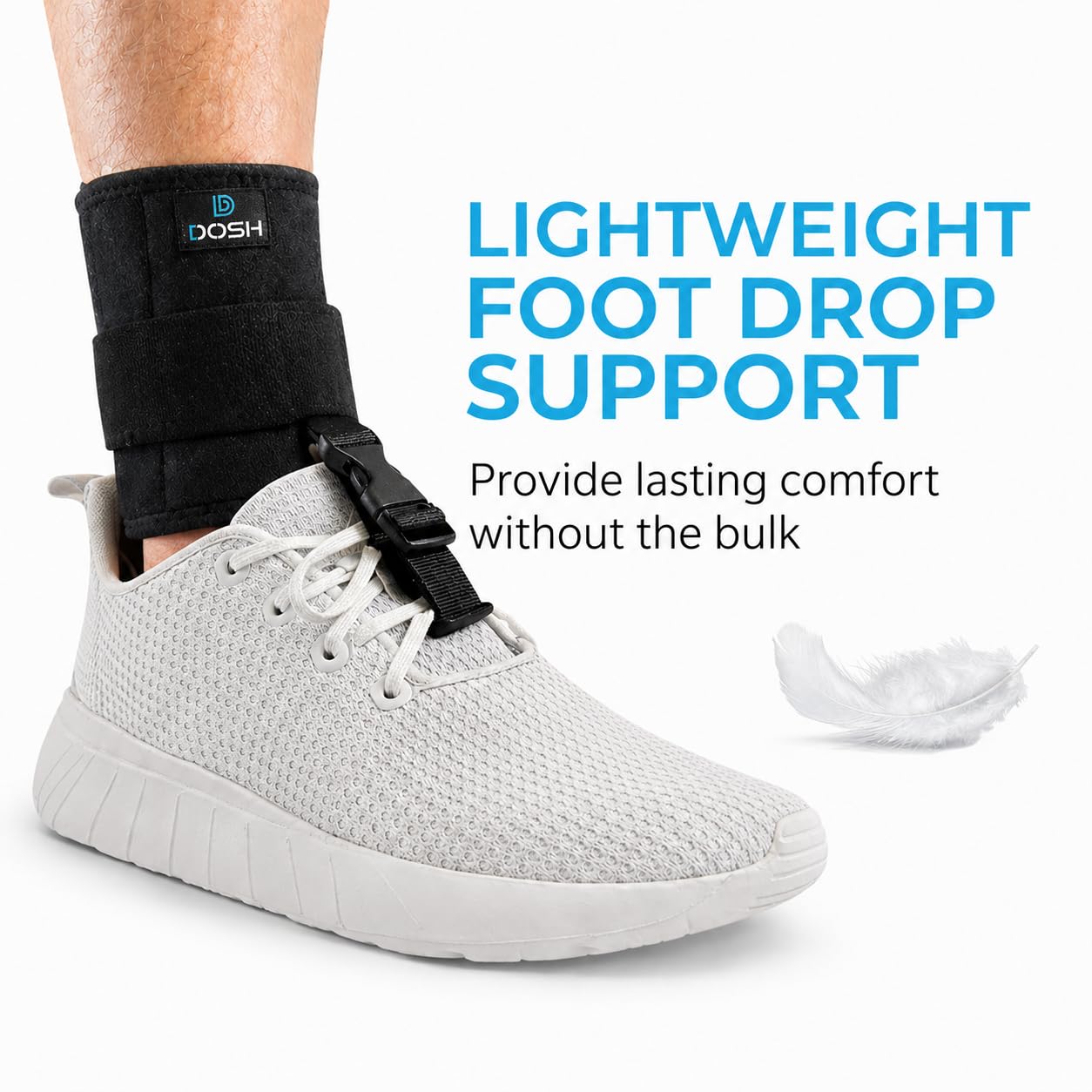
Foot Up Brace (Mild Foot Drop)
For mild foot drop — the kind where dorsiflexion is weak enough to cause occasional toe-scuffing but not weak enough to need a full carbon fiber AFO. This style is a soft strap that wraps around the ankle with an elastic band that connects up to a shoelace clip on the shoe, gently lifting the toes during swing phase. Significantly cheaper than a carbon AFO and much easier to put on, but much less effective — it does NOT do anything to help knee stability, does not control the foot plate, and does not work for moderate or severe foot drop.
Sizing Guide
Most foot-up braces are one-size-adjustable with hook-and-loop closure, fitting ankle circumferences in a wide range. The elastic loop clips to a shoelace. You'll need a lace-up shoe — clips don't attach to slip-ons or stretch laces. The brace is universal left/right.
Tips & Tricks
Position the ankle cuff above the ankle bones, not over them — the bony prominences will get sore quickly under the cuff. Adjust the elastic tension so your toes lift just enough to clear the ground during swing — not so tight that you feel constant tension on the shoelaces. If you trip occasionally despite wearing the brace, you've outgrown what this product can do — step up to a carbon AFO.
Common Mistakes
Buying a foot-up brace when you actually need a carbon AFO — moderate or severe foot drop won't be controlled by an elastic strap. If you regularly catch toes on stairs or uneven surfaces, this is under-bracing. Tightening the elastic too much creates constant tension on the foot and ankle that gets uncomfortable over the day. Wearing it on a slip-on shoe — the clip needs laces to anchor to.
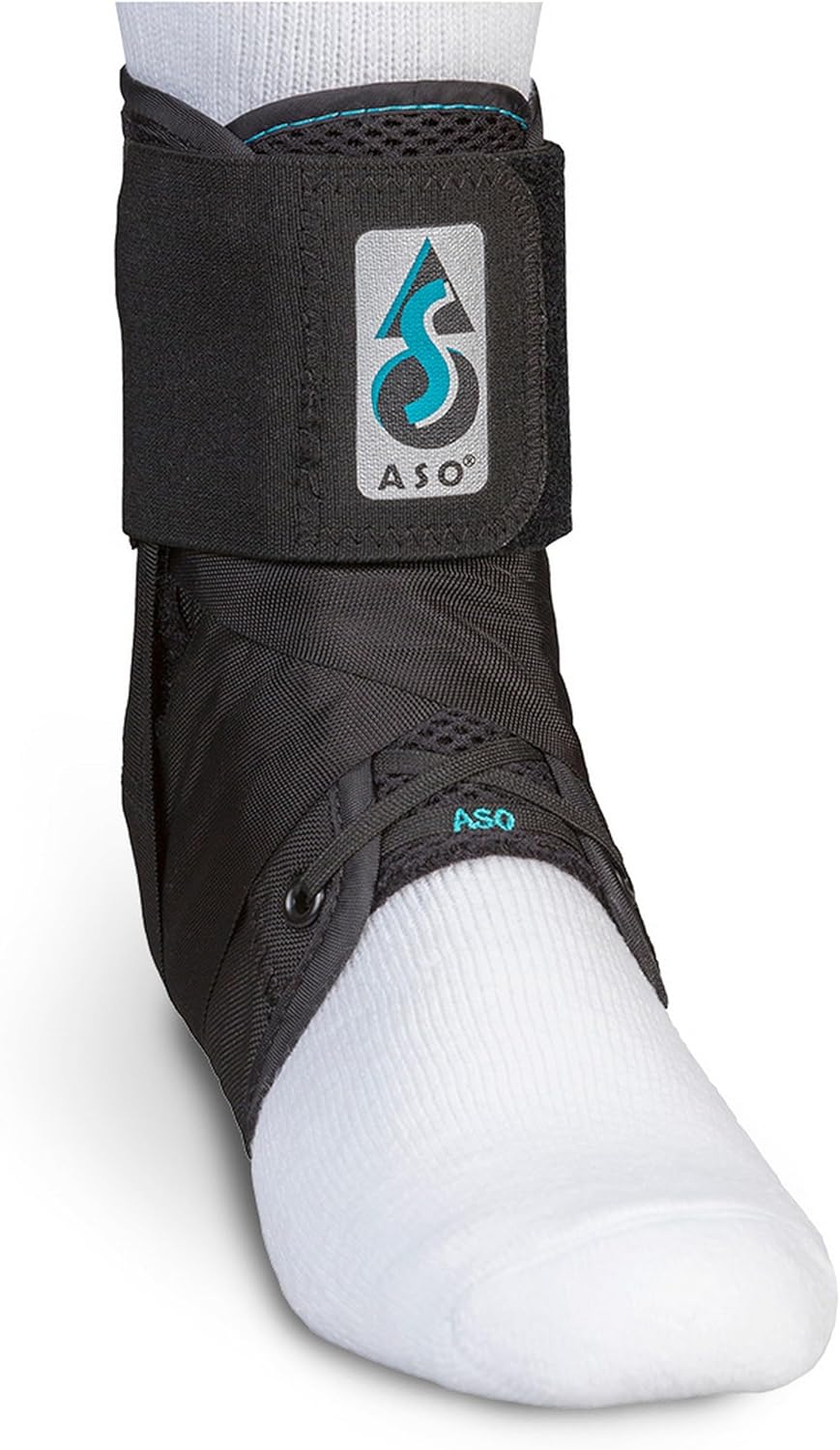
ASO (Ankle Support Orthosis)
For ankle sprains, chronic ankle instability, and return-to-sport ankle support.
Sizing Guide
Measure around your ankle at the narrowest point above the ankle bones. ASO braces fit inside most athletic shoes.
Tips & Tricks
Lace the brace like a shoe, then apply the figure-8 straps for extra support. The ASO is designed to fit inside your shoe.
Common Mistakes
Choosing a size too large reduces support. Make sure the figure-8 straps are used, as they provide most of the stability.
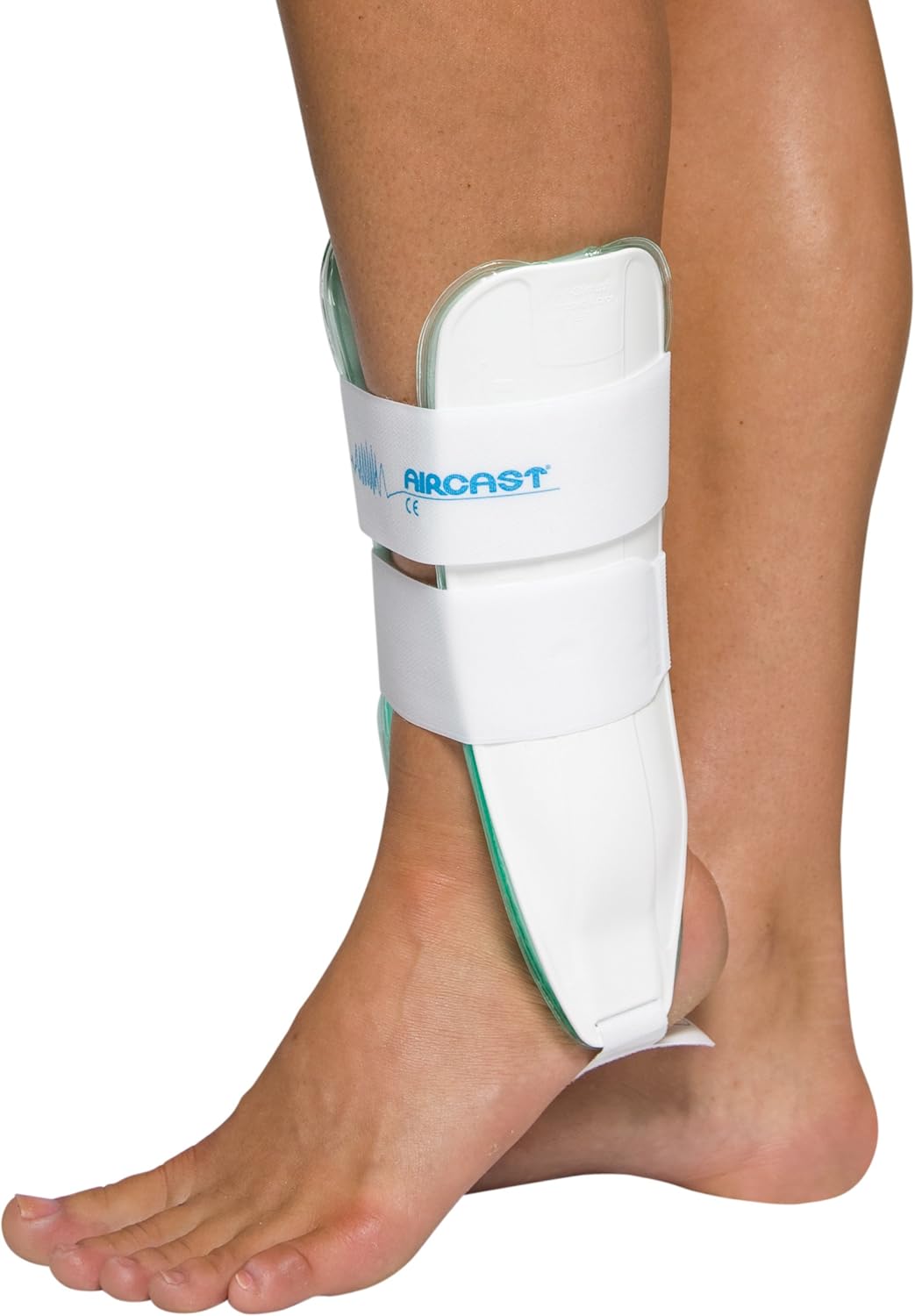
Aircast Ankle Brace
For acute ankle sprains, fractures, and post-injury support with air cell cushioning.
Sizing Guide
Aircast braces come in standard sizes based on ankle and shoe size. Some models are one-size with adjustable air cells.
Tips & Tricks
Inflate the air cells after putting on the brace for a custom fit. The air cells provide graduated compression to reduce swelling. Wear over a thin sock.
Common Mistakes
Not inflating the air cells means you are not getting the compression benefit. An Aircast is bulkier than a lace-up brace, so you may need a wider shoe.

Aircast A60 Ankle Support
For ankle sprains, chronic ankle instability, and athletic injury prevention. Low-profile design fits inside athletic shoes — lighter and less bulky than the classic Air Stirrup, with stabilizers angled at 60 degrees to guard against rollovers.
Sizing Guide
Sized by shoe size and foot side (left or right). Check the manufacturer's chart and pick the side that matches your injured ankle. The brace is designed to fit inside a typical athletic shoe without needing extra width.
Tips & Tricks
Slip the A60 on like a sock, position the stabilizers along the sides of your ankle bone, then tighten the single strap across the top. The 60-degree stabilizers should sit right against the lateral and medial sides — not too far forward or back. Wear over a thin athletic sock for comfort.
Common Mistakes
Choosing the wrong side (left vs. right) reduces support. The A60 is anatomically shaped, so the wrong foot will leave the stabilizers in the wrong position. Skipping the strap tightening means the stabilizers won't stay in place during activity. For severe acute sprains with significant swelling, the classic Air Stirrup with adjustable air cells is usually a better choice.
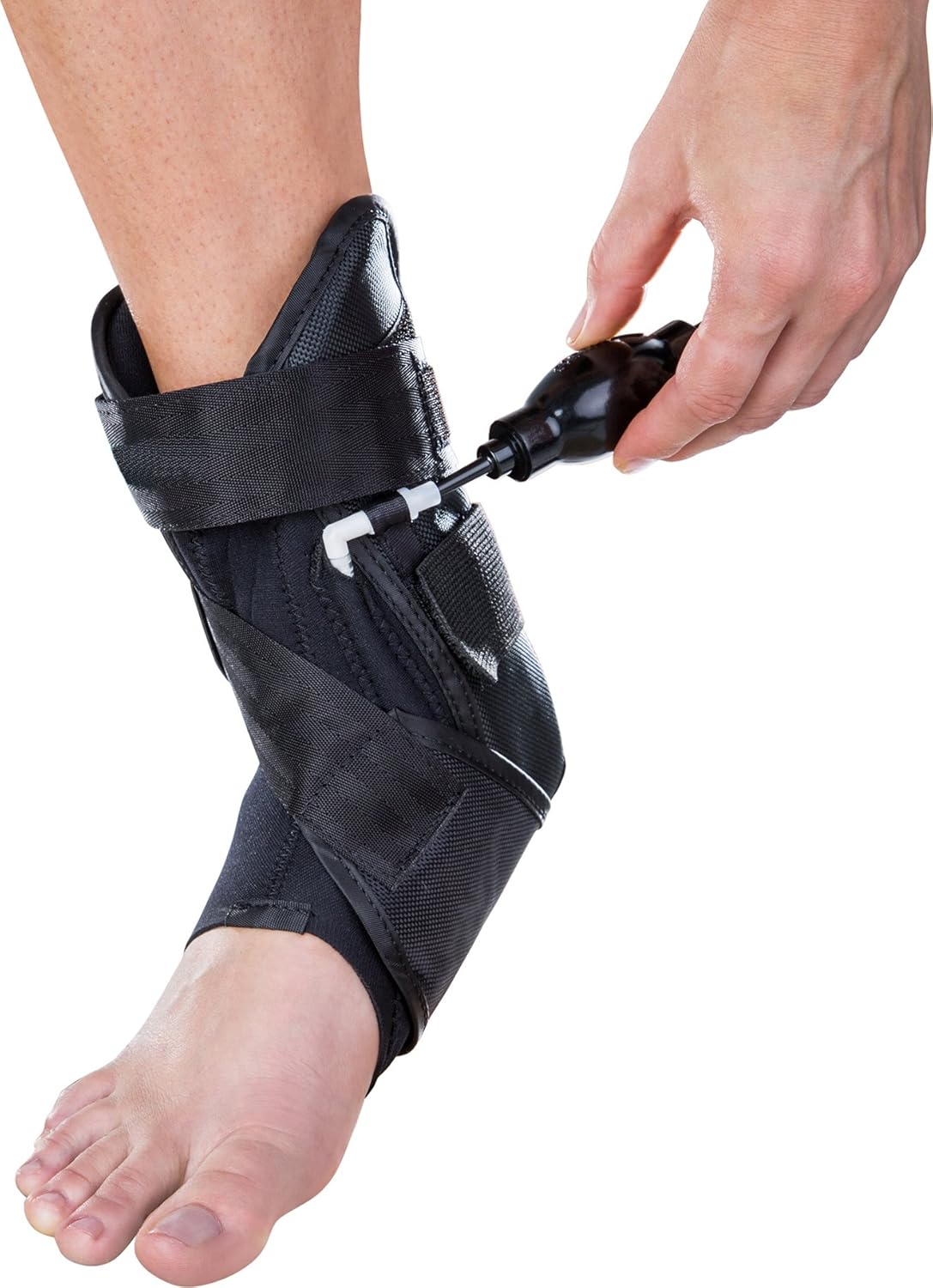
PTTD Ankle Brace (Posterior Tibial Tendon Dysfunction)
For posterior tibial tendon dysfunction (PTTD), early adult-acquired flat foot, and medial ankle pain. Supports the arch and stabilizes the ankle to relieve strain on the posterior tibial tendon.
Sizing Guide
Sized by shoe size and side. The Aircast AirLift PTTD brace sizes are: Small fits women's up to 8.5 / men's up to 7; Medium fits women's 9 to 12.5 / men's 7.5 to 11; Large fits women's 13 / men's 11.5 to 12.5. Pick left or right.
Tips & Tricks
The brace has a semi-rigid shell that wraps the ankle and an inflatable air cell under the arch. After putting the brace on, use the included hand bulb to inflate the air cell until you feel firm support lifting your arch — this takes pressure off the posterior tibial tendon. The rear-entry, two-strap design makes the brace easy to apply. Wear inside a roomy athletic shoe.
Common Mistakes
Skipping the air cell inflation eliminates the arch support that makes this brace different from a generic ankle brace. Wearing a regular lace-up or stirrup ankle brace instead of a PTTD-specific brace will not address the arch collapse. A shoe that is too tight will not have room for the brace.
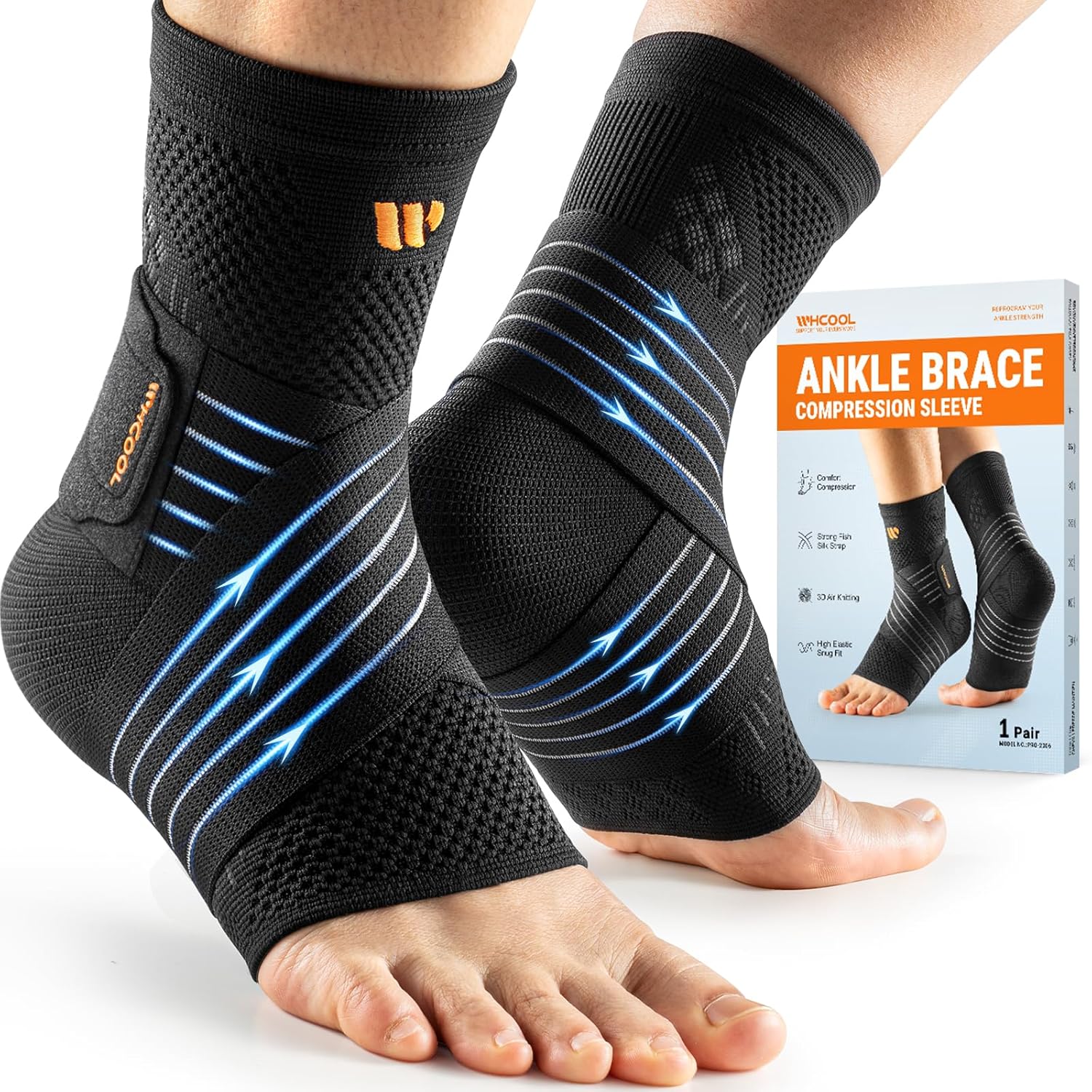
Ankle Compression Sleeve
For mild ankle swelling, general support during activity, Achilles tendonitis recovery, and arthritis discomfort.
Sizing Guide
Measure ankle circumference at the narrowest point above the ankle bones, and at the widest point of the foot at the arch. Match to the manufacturer's chart. The sleeve should fit snugly like compression wear without cutting in or bunching.
Tips & Tricks
Roll the sleeve on rather than pulling to avoid overstretching. The sleeve provides graduated compression and warmth, which helps reduce mild swelling and supports the joint during activity. Most patients wear them during exercise or long days on their feet, and remove them at night.
Common Mistakes
A sleeve that is too tight cuts off circulation and can cause toes to swell or turn cold. If you see skin bulging above the sleeve, size up. Compression sleeves are not a substitute for an ankle brace if you have a true injury or instability — they provide light support only.
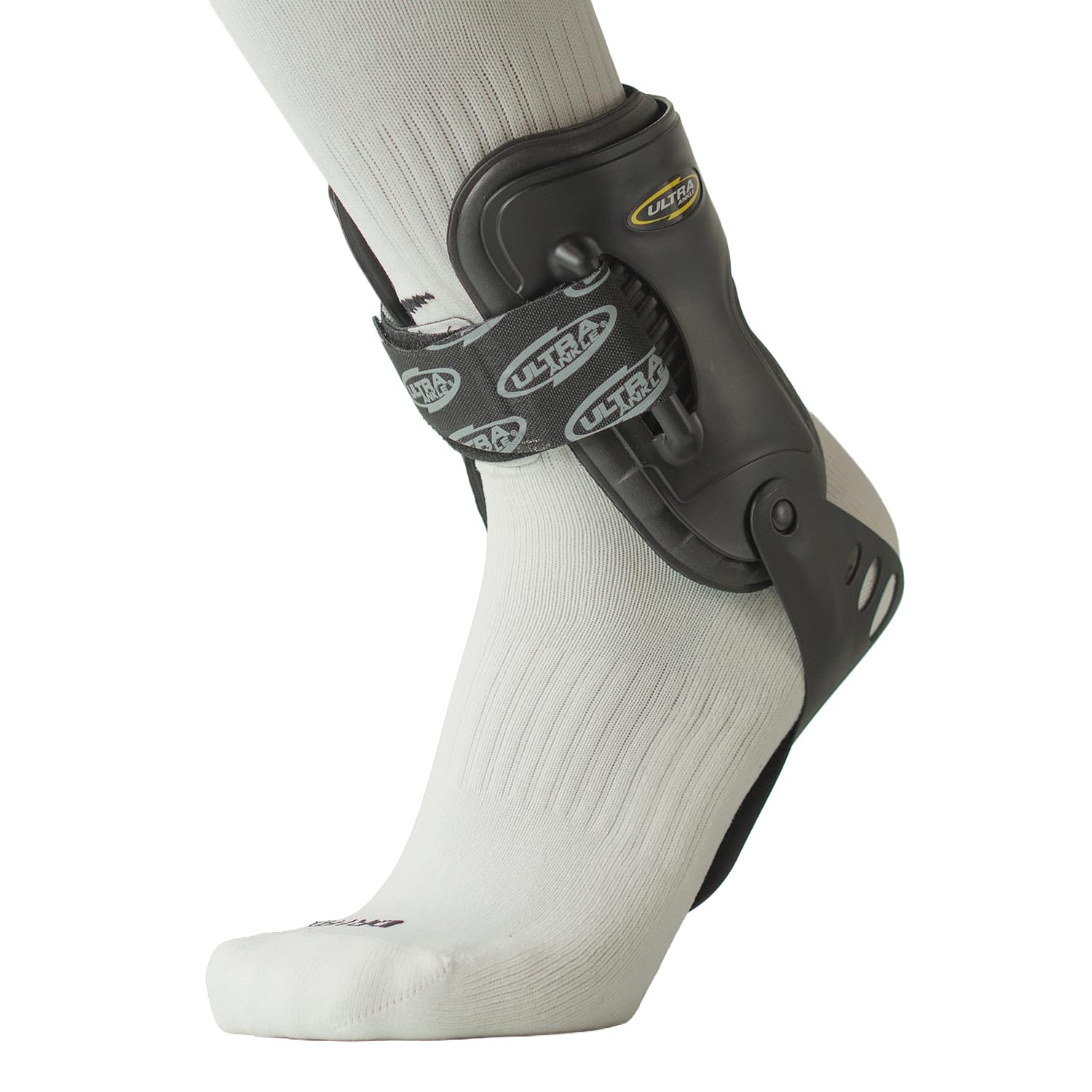
Hinged Rigid Ankle Brace (Ultra High-5)
For chronic ankle instability, recurrent ankle sprains, frequent rollovers, and patients who need a step up from a lace-up ASO without going all the way to a cam boot. The Ultra High-5 has rigid plastic uprights on the inside and outside of the ankle with a hinge at the ankle joint — that provides solid medial-lateral resistance to inversion and eversion while allowing normal up-and-down (dorsi/plantarflex) ankle motion. Fits inside most work boots and hiking boots, which is what makes it the go-to for active-aging adults who keep rolling ankles on uneven terrain.
Sizing Guide
One-size-adjustable in most cases; some versions come in S/M/L by shoe size. The brace fits over a sock and goes inside a closed-toe shoe or boot. Pick a shoe with a removable insole and enough depth — the brace adds bulk around the ankle. Confirm with the manufacturer's chart if your foot size falls at either end of the range.
Tips & Tricks
Put the brace on after the sock, snug the rigid uprights against the sides of your ankle (just BELOW the bony ankle prominences — not over them), and close the straps from bottom to top. Then slide the foot into the shoe. The rigid uprights are what stop the ankle from rolling inward (the most common sprain mechanism); the strap tension just holds the uprights in position. Tighten enough to keep the uprights snug, not so tight that you cut off circulation to the foot.
Common Mistakes
Wearing the brace without a sock — the rigid uprights chafe against bare skin. Positioning the uprights over the bony ankle prominences (medial/lateral malleoli) causes pressure pain within hours; the uprights belong just below those bones. A shoe that's too tight or too shallow won't accommodate the brace — you'll need a wider/deeper boot or shoe. This is the right tool for chronic instability and recurrent sprains; for an acute fresh sprain in the first 1-2 weeks, a cam boot or ASO with more circumferential support is often the better choice.