Wrist & Hand Braces
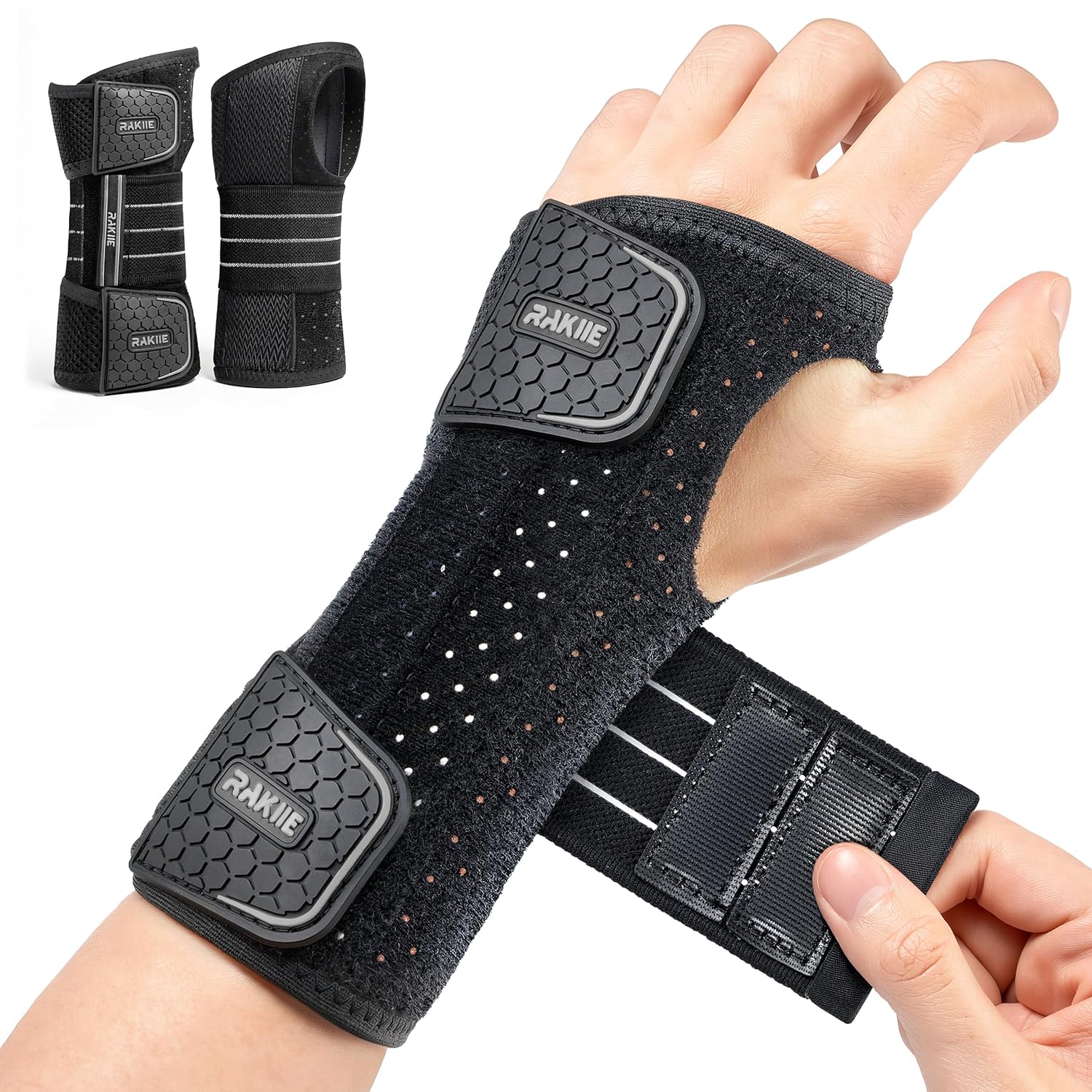
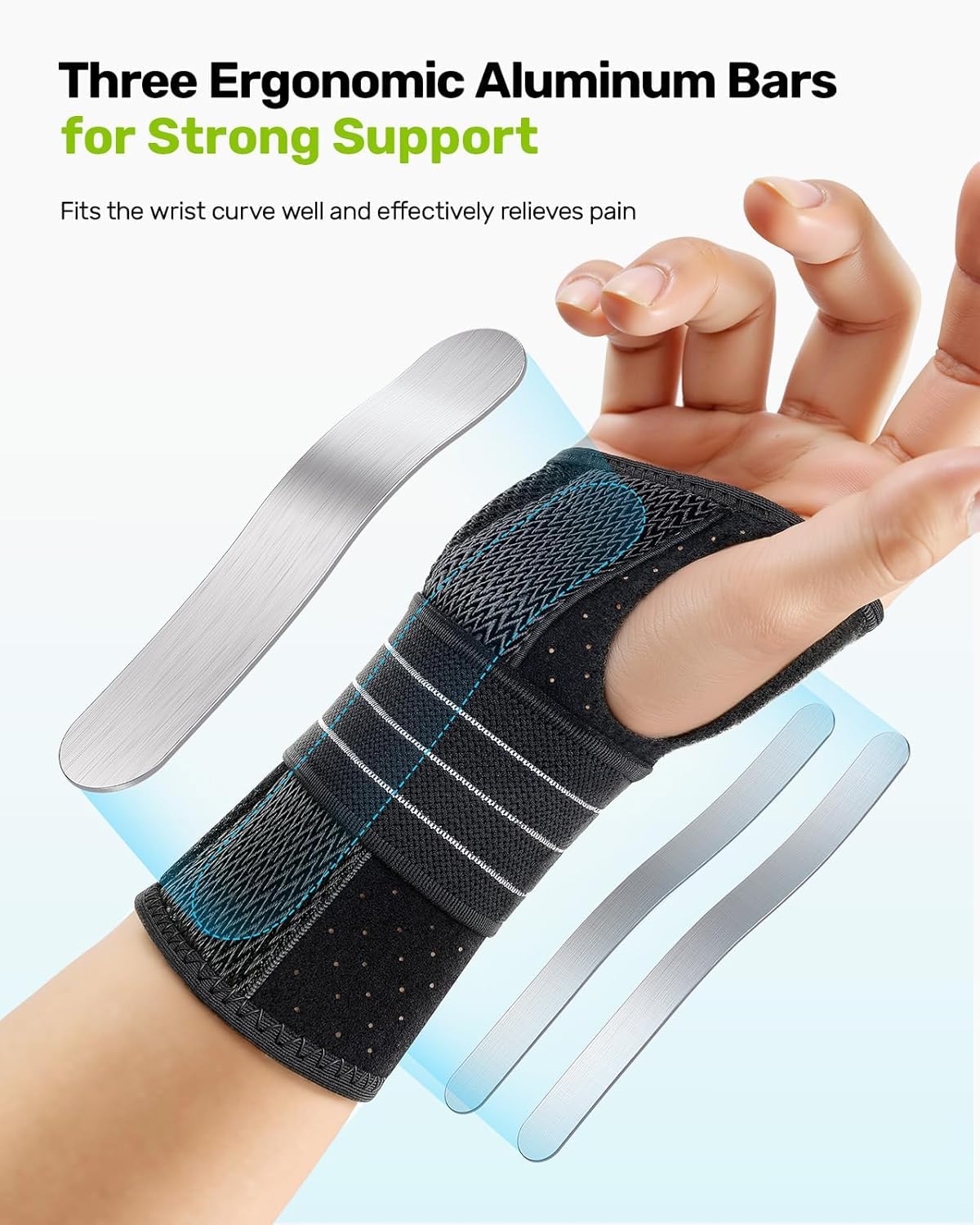
Cock-Up Wrist Splint (Carpal Tunnel)
For carpal tunnel syndrome, wrist sprains, tendonitis, and post-injury support. The splint holds the wrist in a neutral, slightly extended (cocked-up) position — that's the position with the most room inside the carpal tunnel and the least nerve compression, which is why this splint helps symptoms so much, especially overnight.
Sizing Guide
Measure around your wrist at the wrist crease and match to the manufacturer's S/M/L chart. The Rakiie 2-pack version listed here is symmetric and works on either hand — handy because most patients with carpal tunnel benefit from wearing one on each side. The metal stay should sit along the underside (palm side) of your forearm.
Tips & Tricks
For carpal tunnel, wearing the splint at NIGHT is the single most effective use — we sleep with our wrists curled, which is exactly the position that compresses the median nerve. Wearing the splint during night sleep can dramatically reduce morning numbness and tingling within 1-2 weeks. Daytime wear during aggravating activities (typing, gardening, heavy gripping) is also helpful.
Common Mistakes
A splint that bends your wrist DOWN (into flexion) is the wrong product — the "cock-up" name means extension. Tightening the straps too much cuts off circulation and causes numbness in the fingers (which can be confused with carpal tunnel itself). Wearing only during the day and not at night misses the most effective window.
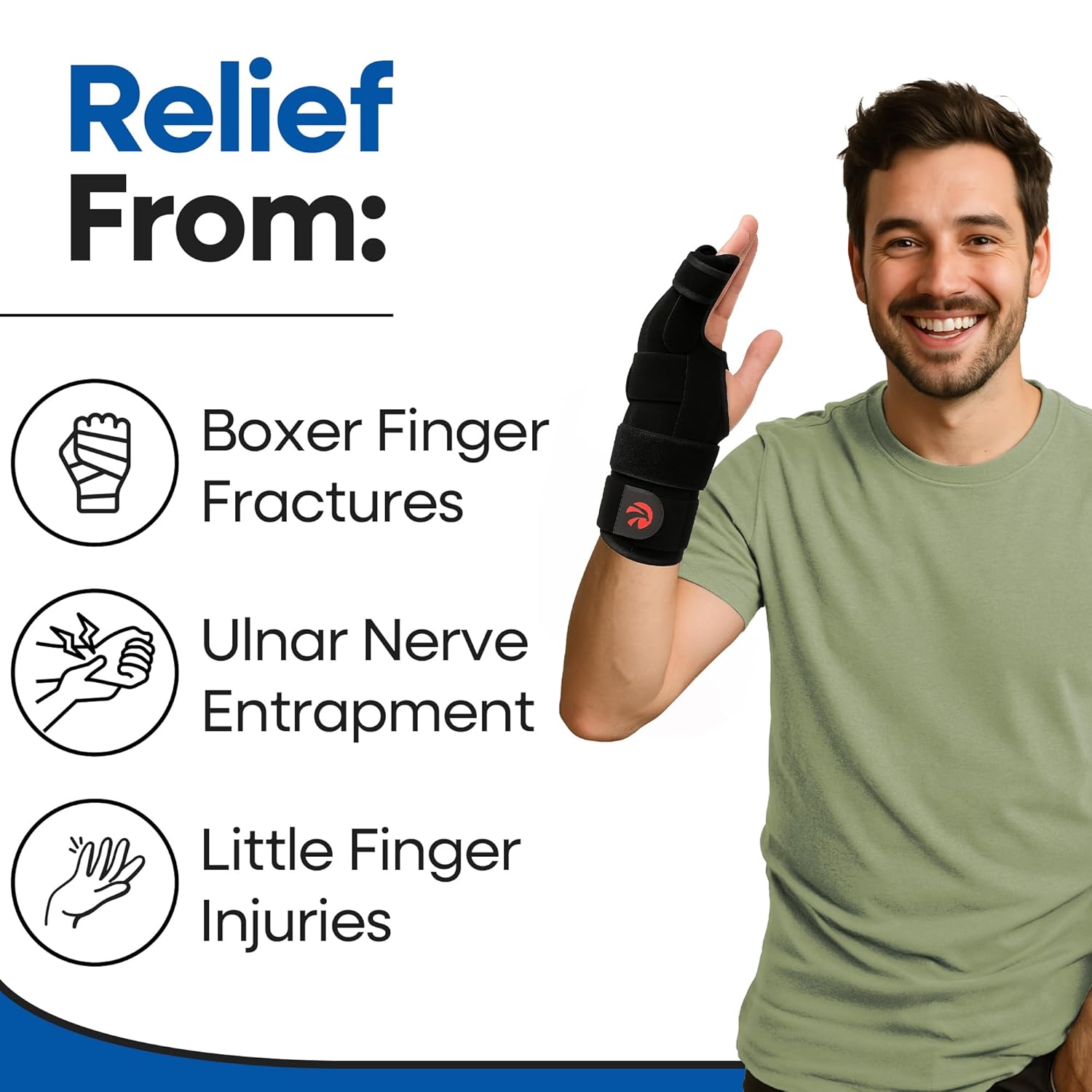
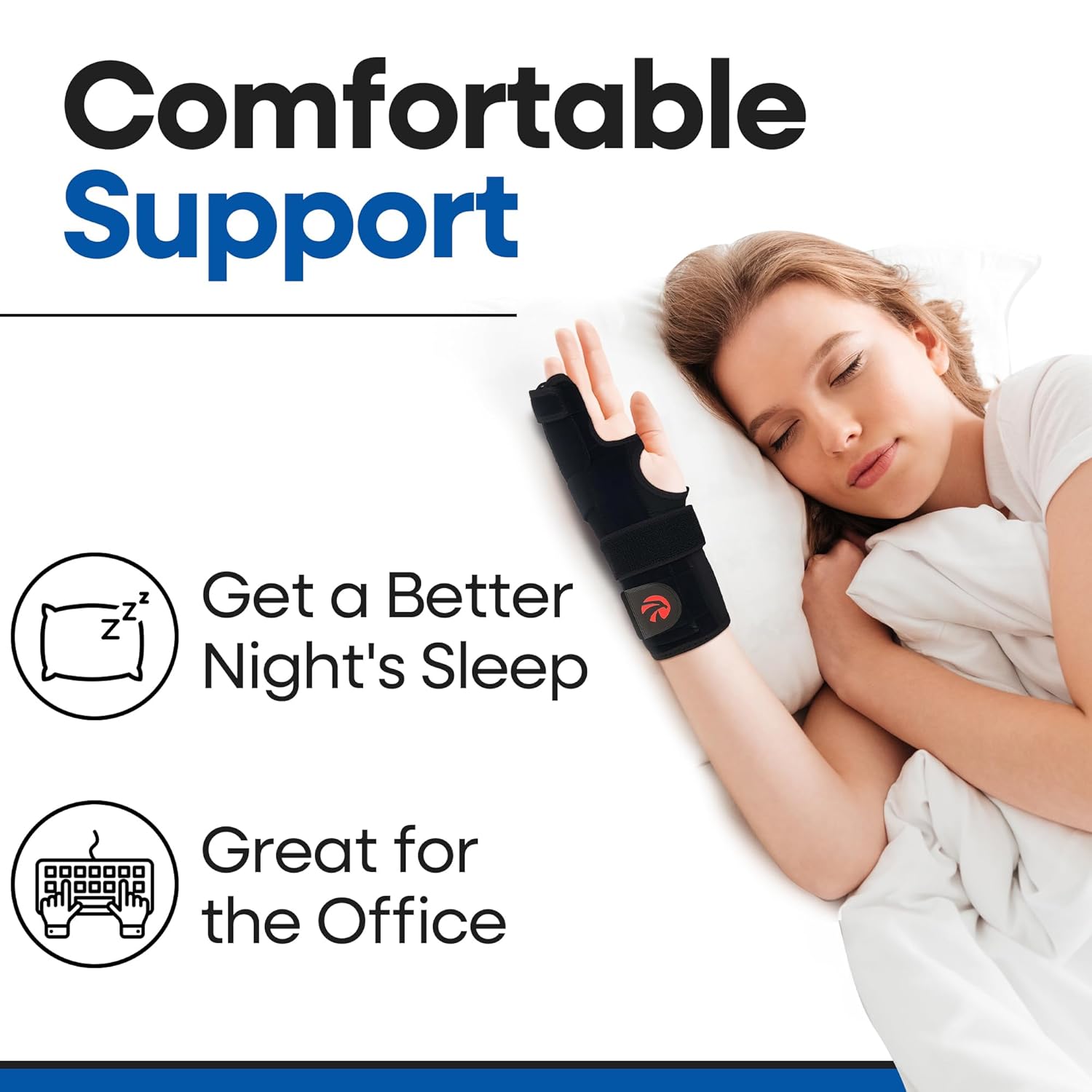

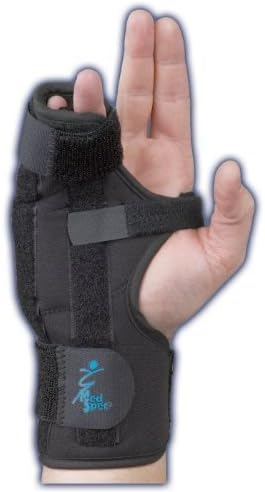
Boxer Splint / Ulnar Gutter Splint (Short & Longer Versions)
For boxer's fractures (5th metacarpal fractures of the pinky), pinky and ring-finger metacarpal injuries, and Dupuytren's-contracture pinky support. The splint immobilizes the ulnar (pinky) side of the hand while leaving the thumb, index, and middle fingers free for daily use. Two versions exist: a SHORTER metacarpal brace (covers just the hand and the base of the pinky/ring finger — more functional for everyday wear), and a LONGER ulnar-gutter style (extends from the fingertips up to mid-forearm — more rigid, used when the fracture needs full immobilization).
Sizing Guide
Measure hand circumference around the knuckles. Match to the manufacturer's chart and choose LEFT or RIGHT. The shorter version is what most boxer's-fracture patients are sent home with from urgent care; the longer ulnar-gutter style is what an orthopedist typically prescribes if the fracture is more displaced or needs strict immobilization. Some patients use the longer one for the first 2-3 weeks and step down to the shorter one as healing progresses.
Tips & Tricks
For both versions: secure firmly but check that the pinky and ring fingertips stay pink and warm. If you have a confirmed fracture, follow your clinician's instructions for wear time (usually 24/7 for the first few weeks, then gradually weaning). The shorter version lets you grip a pen or hold a phone with your other three fingers; the longer ulnar-gutter blocks the wrist and is more disruptive but more protective. If skin under the splint gets sweaty, wear a thin stockinette underneath.
Common Mistakes
Choosing the short version for a fracture that needs full immobilization — if your orthopedist said "no wrist motion," you need the longer ulnar-gutter style. Over-tightening cuts off circulation to the fingers; if pinky and ring fingertips turn white or feel numb, loosen immediately. Buying the wrong hand (left vs right) is the third most common error.
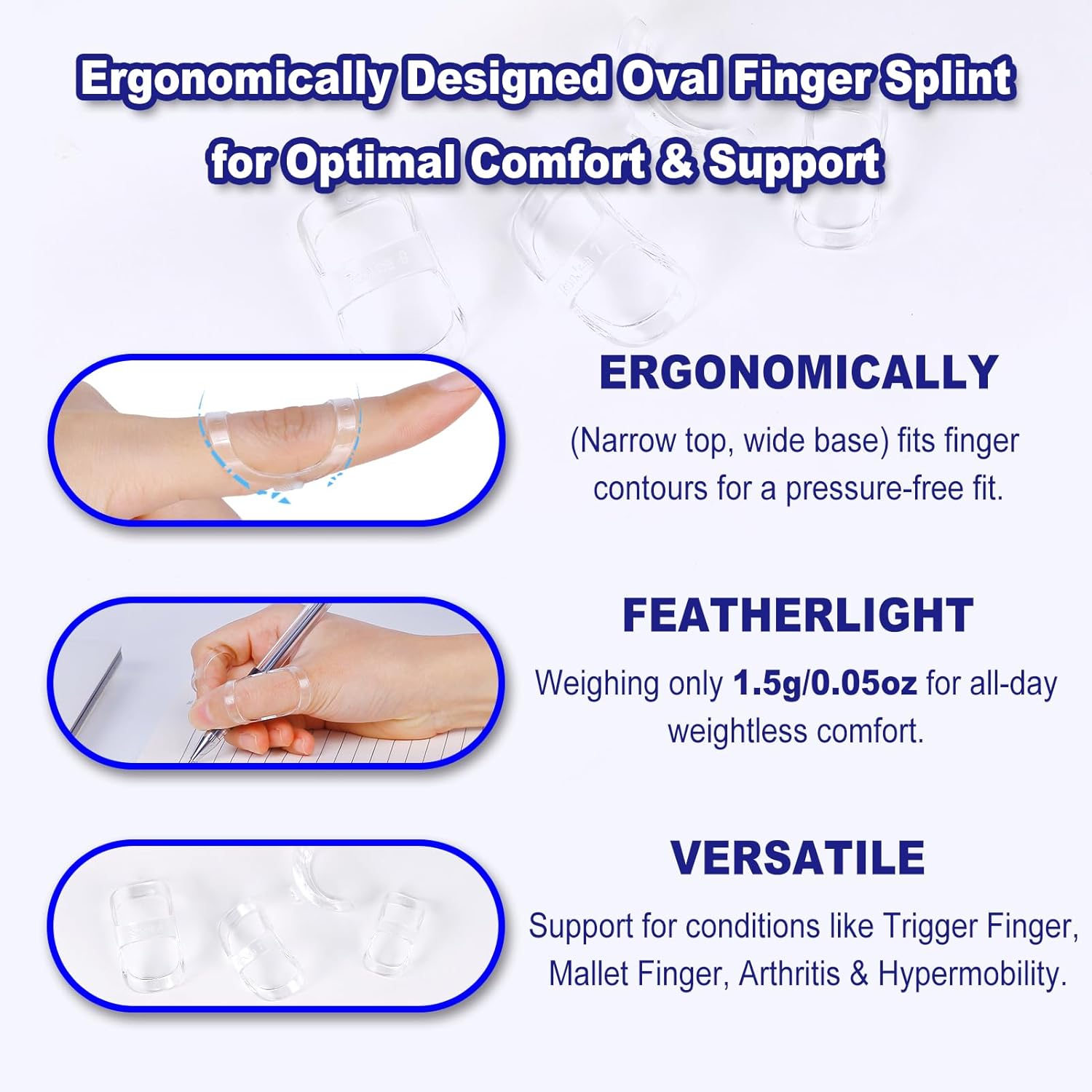
Oval Finger Splints (Graduated Kit)
For finger hyperextension, mallet finger, swan-neck deformity, trigger finger, and small-joint instability. The oval shape wraps around the finger and blocks hyperextension (the joint bending backward) while still allowing controlled flexion (forward bend) — a unique trick the original 3pp "Oval 8" design pioneered. This 10-piece kit gives you 6 graduated-size oval splints plus 4 finger sleeves so one purchase covers virtually any finger size.
Sizing Guide
Measure the circumference of the finger joint you need to splint at its widest point. The kit's 6 graduated sizes (sizes 4 through 9) cover the typical adult fingertip-to-base range. If you only know which finger is affected, start with the size that looks closest and try it — the kit is meant for sizing experimentation. The splint should slide on snugly but not pinch.
Tips & Tricks
Position the wider part of the oval directly OVER the joint you're protecting (PIP or DIP). The splint blocks hyperextension but allows the joint to bend forward — that's the design that lets you keep using the hand. For nighttime mallet-finger management, the splint can be flipped to immobilize the DIP joint in slight extension. The clear plastic is dishwasher-safe (top rack); soap and air-dry between wears.
Common Mistakes
A splint too tight will turn the fingertip white, blue, or numb — go up one size. A splint too loose slips off the joint and stops working. Wearing the splint upside-down (narrow side over the joint) defeats the design. For confirmed mallet finger, the splint must be worn 24/7 for the full healing window (typically 6-8 weeks) — taking it off even once to wash the finger restarts the clock.
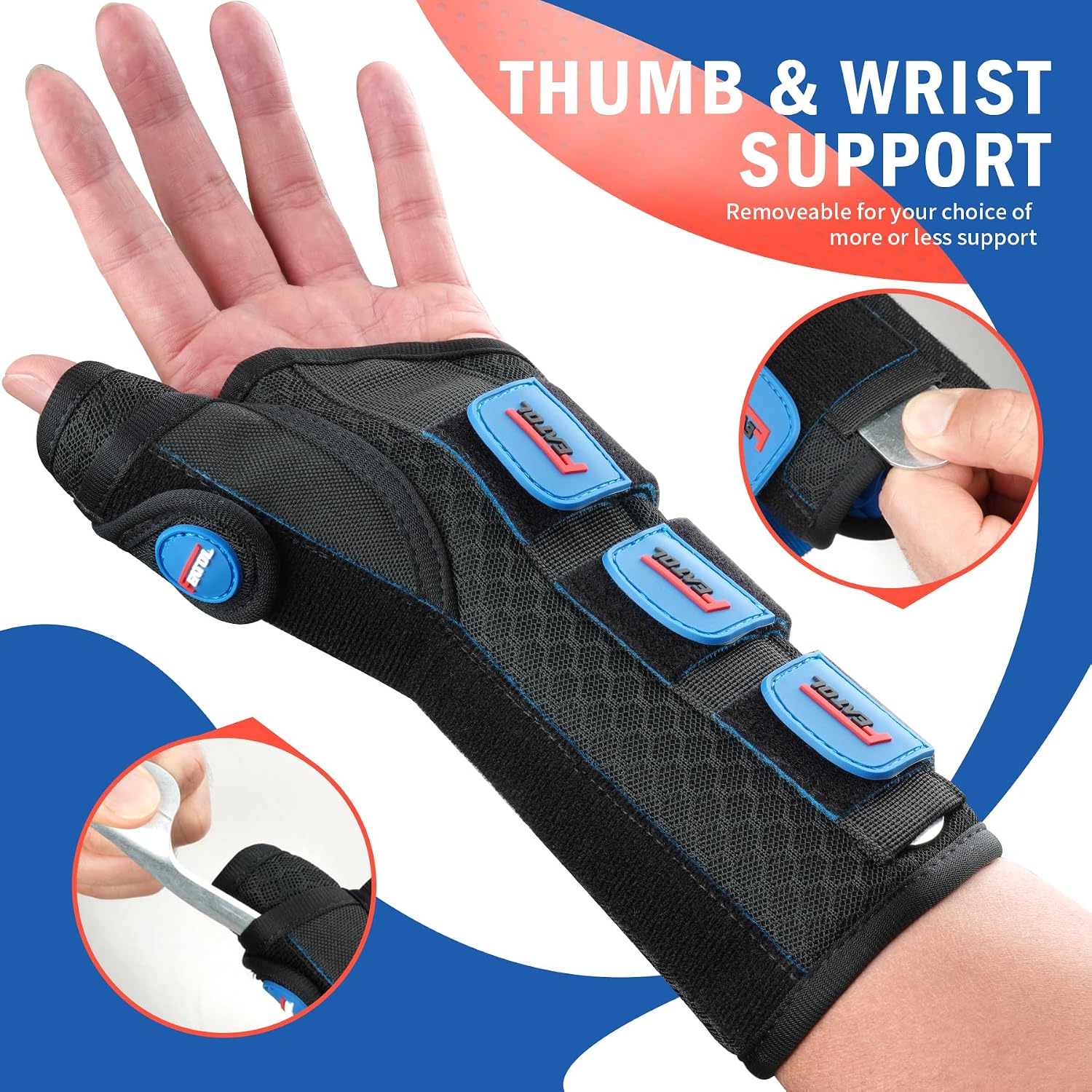
Thumb Spica
For thumb sprains (gamekeeper's thumb / skier's thumb), thumb arthritis, and De Quervain's tendonitis.
Sizing Guide
Measure around your wrist and thumb as directed by the manufacturer. Choose left or right hand. The spica should immobilize the thumb while leaving other fingers free.
Tips & Tricks
The splint should hold your thumb in a comfortable, slightly extended position. You should still be able to move your other four fingers freely. Wear over a thin liner or sock if the material causes skin irritation.
Common Mistakes
Getting the wrong hand is the most common error. Also, if the thumb can still move freely inside the brace, it is too large and will not provide adequate support.
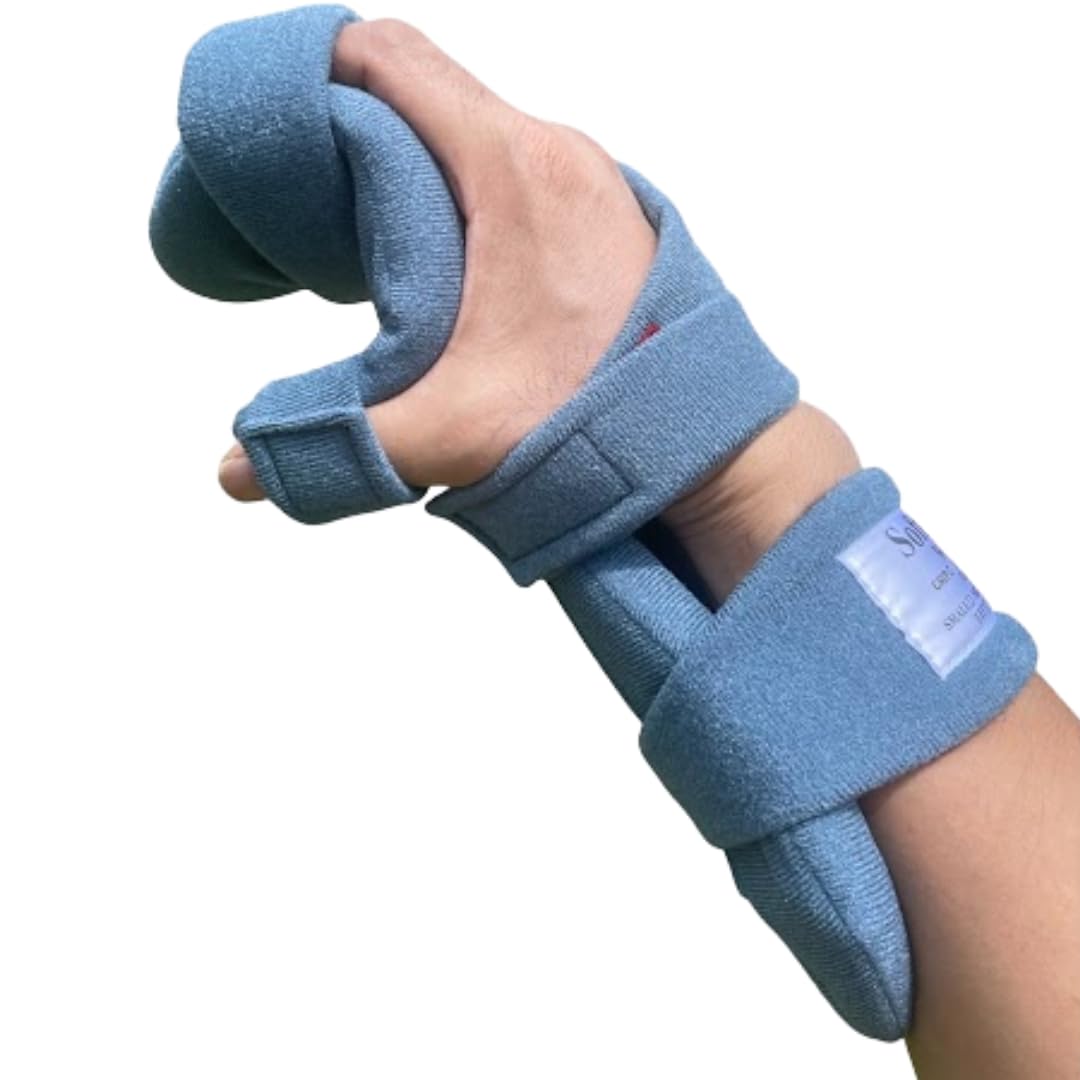
Resting Hand Splint (Boxer Splint)
For post-stroke spasticity, post-injury immobilization, prevention of finger contractures, nighttime hand stiffness, and positioning after burns or surgery.
Sizing Guide
Measure forearm circumference at the widest point and choose left or right. Most brands come in S, M, L. The splint should extend from the fingertips to about two-thirds up the forearm.
Tips & Tricks
The splint holds the hand in a functional resting position: wrist slightly extended, knuckles slightly bent, fingers gently curved, thumb out to the side. Most patients wear it primarily at night or in long intervals during the day. Build up wear time gradually if the hand is not used to it.
Common Mistakes
Wearing the splint 24/7 without breaks can stiffen the hand instead of helping it. Buying the wrong hand is common. If a finger or the thumb pokes outside the splint, the size is wrong.
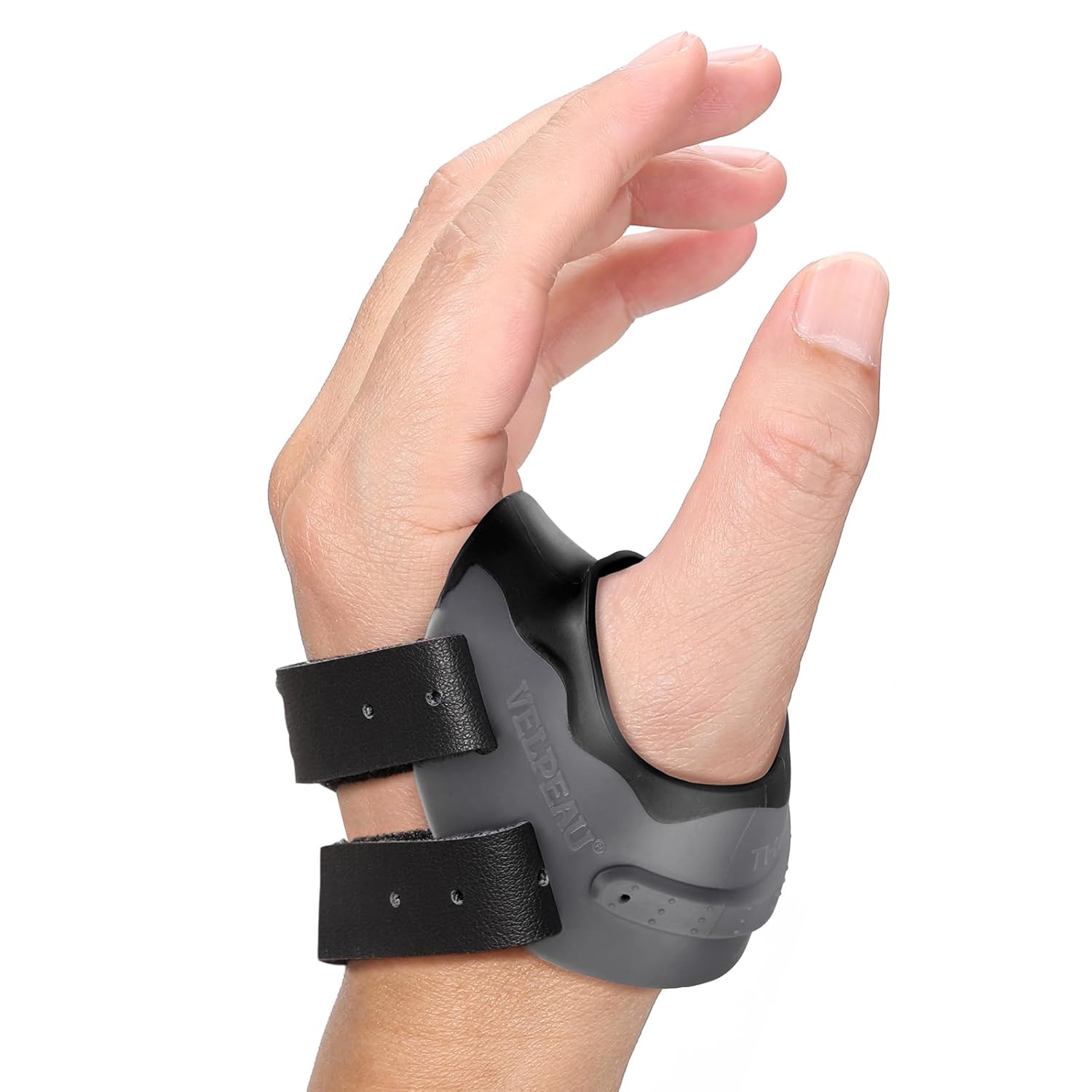
CMC Thumb Brace (Velpeau Basal Joint Brace)
For pain and instability from CMC (basal joint) thumb osteoarthritis — the spot at the base of the thumb that aches when you open a jar, turn a key, or pinch hard. The Velpeau version uses a shape-memory metal stay inside a soft fabric body that can be molded to your hand for a custom-feeling fit. It stabilizes the basal joint (CMC-1) while leaving the IP joint and the rest of your fingers free, so pinching and fingertip dexterity stay intact.
Sizing Guide
Measure the circumference of your hand just below the knuckles, excluding the thumb. The Velpeau sizing chart runs S/M/L. Confirm LEFT or RIGHT before ordering. The shape-memory stay can be bent slightly to follow the natural angle of your thumb — do this once with the brace ON and your thumb in a relaxed neutral position.
Tips & Tricks
Wear during pain-causing activities (opening jars, writing, gardening, gripping anything) rather than 24/7 — keeping the joint mobile during low-load tasks helps maintain range of motion. The fabric body washes by hand and air-dries. If you have severe basal-joint arthritis and need more rigid support, a custom thermoplastic CMC splint from an occupational therapist is the next step up.
Common Mistakes
Buying a generic "thumb spica" instead of a CMC-specific brace — a full thumb spica immobilizes the entire thumb (including the tip), which is the wrong design for arthritis and ruins your ability to pinch. Sizing too tight bunches the fabric and shifts the stay off-center; sizing too loose lets the brace roll and irritate skin at the strap edges. Skin irritation usually means the brace is sliding around — go down a size.
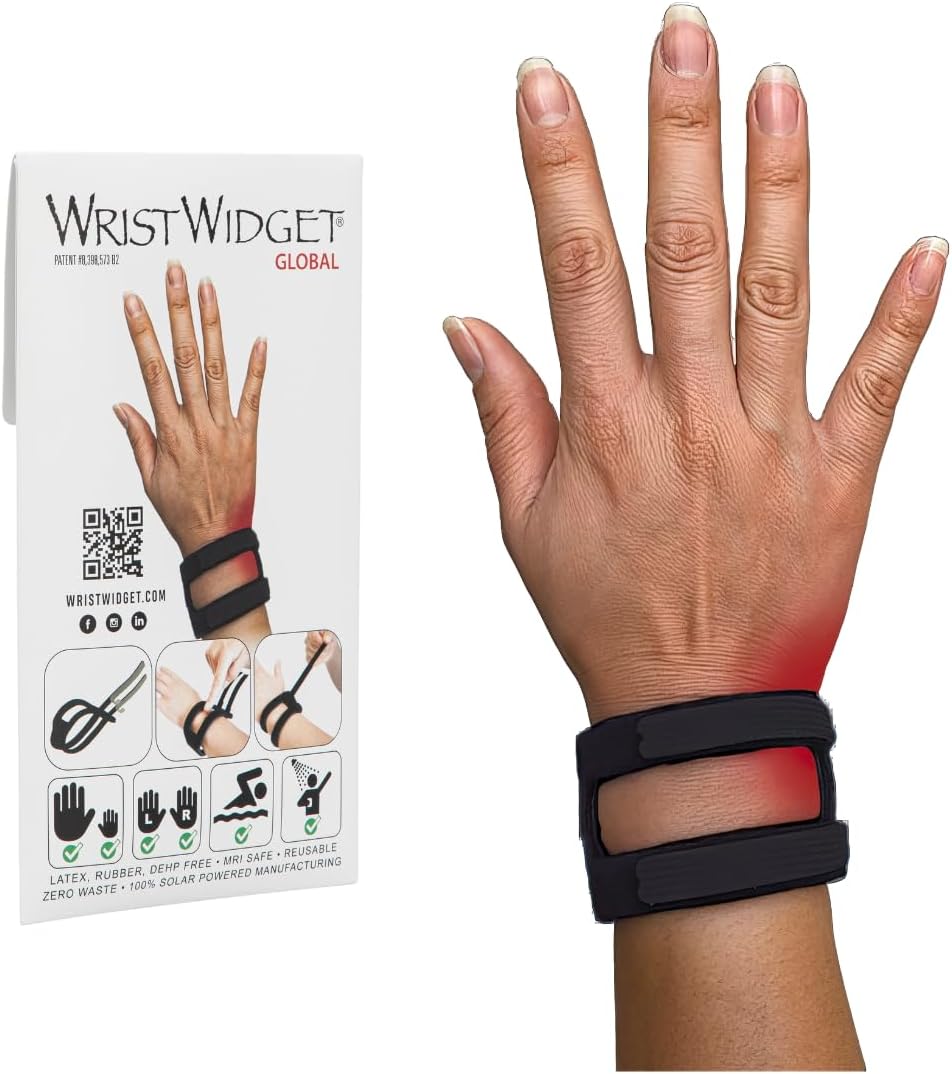
Wrist Widget (TFCC Support)
For TFCC (triangular fibrocartilage complex) tears, ulnar-sided (pinky-side) wrist pain, and weight-bearing wrist strain. Supports the wrist without immobilizing it.
Sizing Guide
One size fits most, with a wrist circumference range of 14 cm to 22 cm. The same brace works on either the left or right wrist.
Tips & Tricks
The brace is designed to be worn at all times, including in the shower and during sleep. Tension should feel snug at night and tighter during heavier activities. It usually takes about a week to dial in the right tension for your wrist. Track weight-bearing tolerance weekly (e.g., how much you can press into a tabletop without pain) to monitor progress. Wash in cold water and hang to dry.
Common Mistakes
A common error is wearing it too loose, which gives no real support. Equally common is wearing it too tight, which causes numbness in the hand. The goal is the tightest comfortable tension that lets you push, lift, or weight-bear with reduced pain. Removing it for activity defeats its purpose.
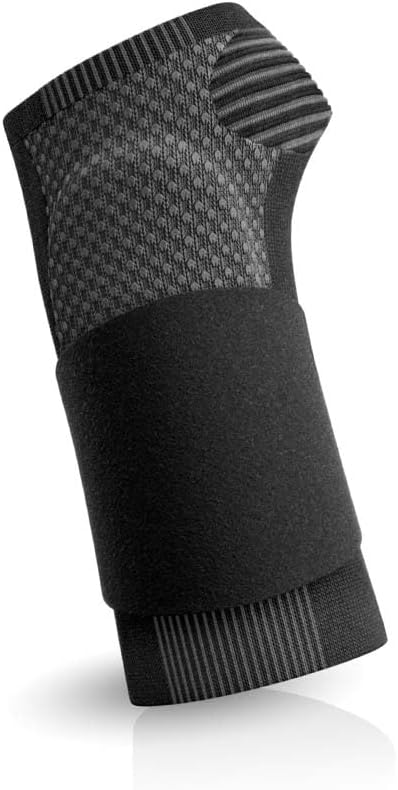
DJO Exos Thumb Spica (Cast Replacement, Boa Dial)
For scaphoid fractures, Bennett or Rolando thumb fractures, and post-surgical thumb immobilization where the orthopedist would otherwise have applied a cast. The DJO Exos thumb spica is built from a thermoformable rigid black thermoplastic shell with a Boa dial closure — it actually replaces a fiberglass cast in many cases, with the advantage that it can be removed for skin checks, showers, and clinic adjustments.
Sizing Guide
Measure forearm circumference 4 inches below the elbow crease and around the wrist. Match to the DJO Exos size chart (typically S/M/L/XL with LEFT or RIGHT designation). The shell extends from mid-forearm out past the thumb tip and the Boa dial cinches it down — a single click of the dial is a small but precise tension change. Your orthopedist or hand surgeon usually heat-mold-customizes this brace at the clinic before you take it home, so the fit should already be dialed in to your specific bones.
Tips & Tricks
Operate the Boa dial like a ski boot — turn clockwise to tighten, pull up to release. Once your surgeon sets the tension, do not loosen or adjust the dial yourself unless told to (the shell's molded shape only works at the prescribed tension). For showering, you can lift the dial and slide the shell off; dry the skin completely before reapplying. Wear a thin stockinette underneath for comfort and to wick sweat. Most patients keep the brace on 24/7 for the first several weeks per their orthopedist's protocol.
Common Mistakes
A rigid Exos-style spica is too much support for everyday arthritis or tendonitis — it's a cast replacement for actual fractures, not a comfort brace. Loosening the Boa dial because the brace "feels tight" can undermine fracture healing — call your surgeon first. Skipping the heat-mold customization step (your clinician does this in the office) leaves you with a generic-fit brace that won't perform like the cast it's replacing. Check fingertip color and sensation regularly; numbness or color change means too tight.