Shoulder Braces
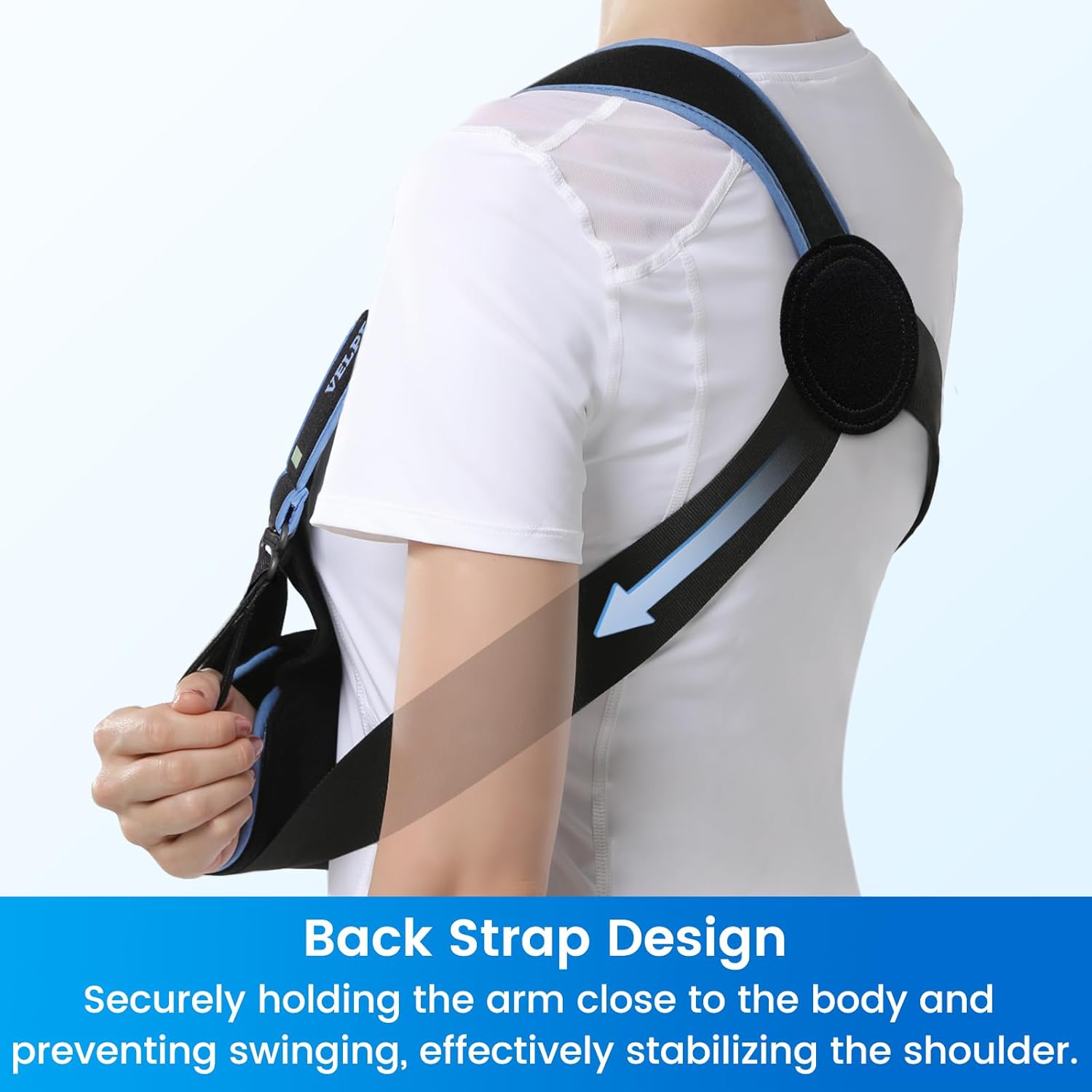
Simple Sling
For shoulder injuries, arm fractures, post-surgical support, and general arm immobilization.
Sizing Guide
Most simple slings are one-size-adjustable with a strap that goes around the neck. Adjust the strap length so your elbow is bent at 90 degrees and your hand is slightly above elbow height.
Tips & Tricks
Keep your elbow bent at a right angle. Your hand and wrist should be supported inside the sling. Adjust the neck strap so the sling holds your arm comfortably without pulling your neck to one side. Use the included waist strap if available to prevent the arm from swinging.
Common Mistakes
Hanging your arm too low in the sling puts extra strain on your neck and shoulder. Also, not using a waist strap allows the arm to swing and can cause pain at the injury site.
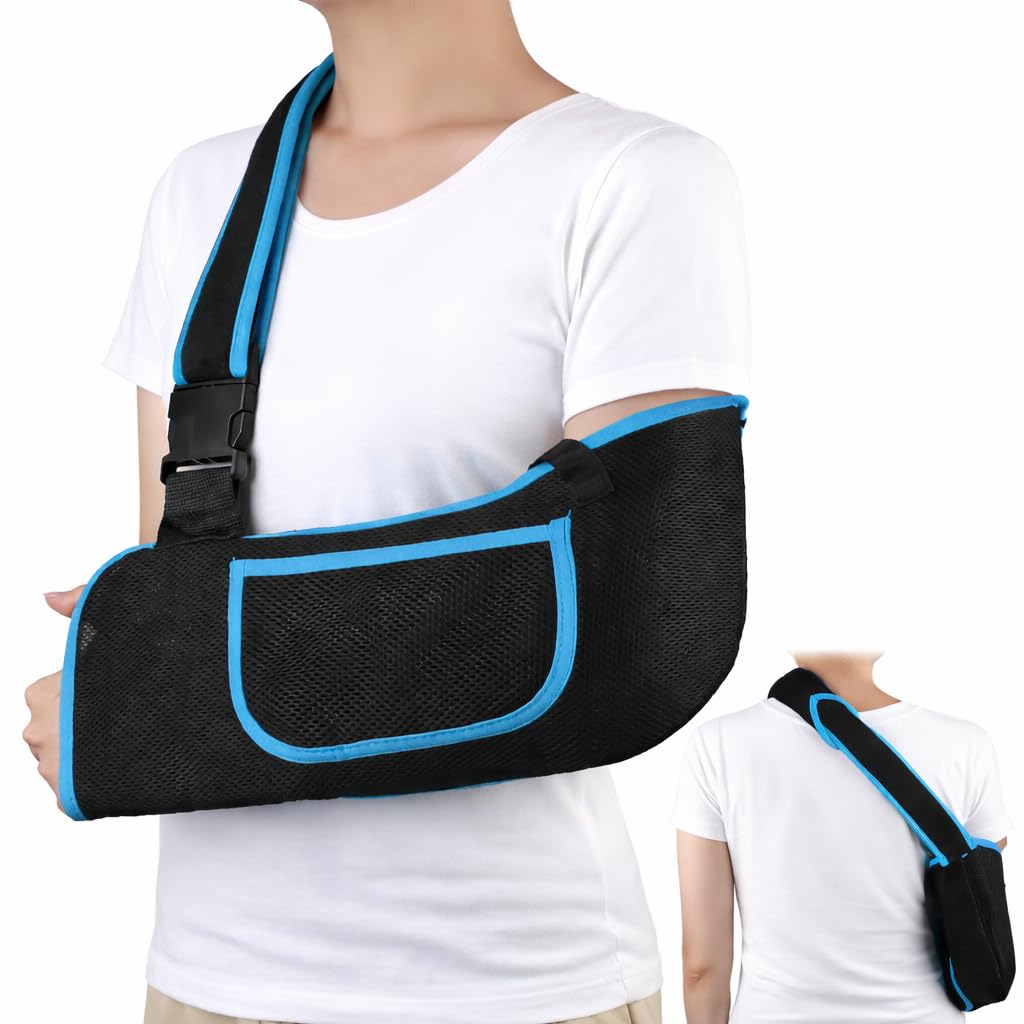
Ultrasling (Abduction Sling)
For rotator cuff repair, labral repair, total shoulder replacement, and other shoulder surgeries that require the arm to be immobilized slightly away from the body. The sling locks the elbow at 90 degrees and the abduction pillow on the torso holds the arm in the position your surgeon specified.
Sizing Guide
Ultraslings come in S, M, L, XL based on torso size and arm length. Check the specific model's sizing chart — manufacturer sizing varies. The abduction pillow (the wedge between your arm and your torso) comes in different shapes and angles depending on the design — a small wedge for neutral immobilization, a thicker triangular pillow for 15-degree abduction, or a larger angled block for 30-degree positioning. Your surgical team will tell you which angle you need; pick the sling model that matches.
Tips & Tricks
Wear the pillow at the angle your surgeon specified — don't squish it down to make the sling more comfortable. The pillow rests against your torso just above the hip bone; the strap around your waist anchors it. Keep the sling on at all times unless instructed otherwise (including during sleep, in most rotator cuff protocols). Use the included exercise ball or stress ball, if provided, for gentle hand squeezing every hour to maintain forearm circulation.
Common Mistakes
Removing the sling too early or adjusting the abduction angle without your surgeon's guidance can compromise your surgical repair. Compressing the pillow flat against your side defeats the abduction position — the wedge shape is the whole point. Don't use the affected arm for lifting, pushing, pulling, or reaching while in the sling. Sleeping on a recliner or with a wedge pillow makes the first 2-4 weeks dramatically more comfortable.
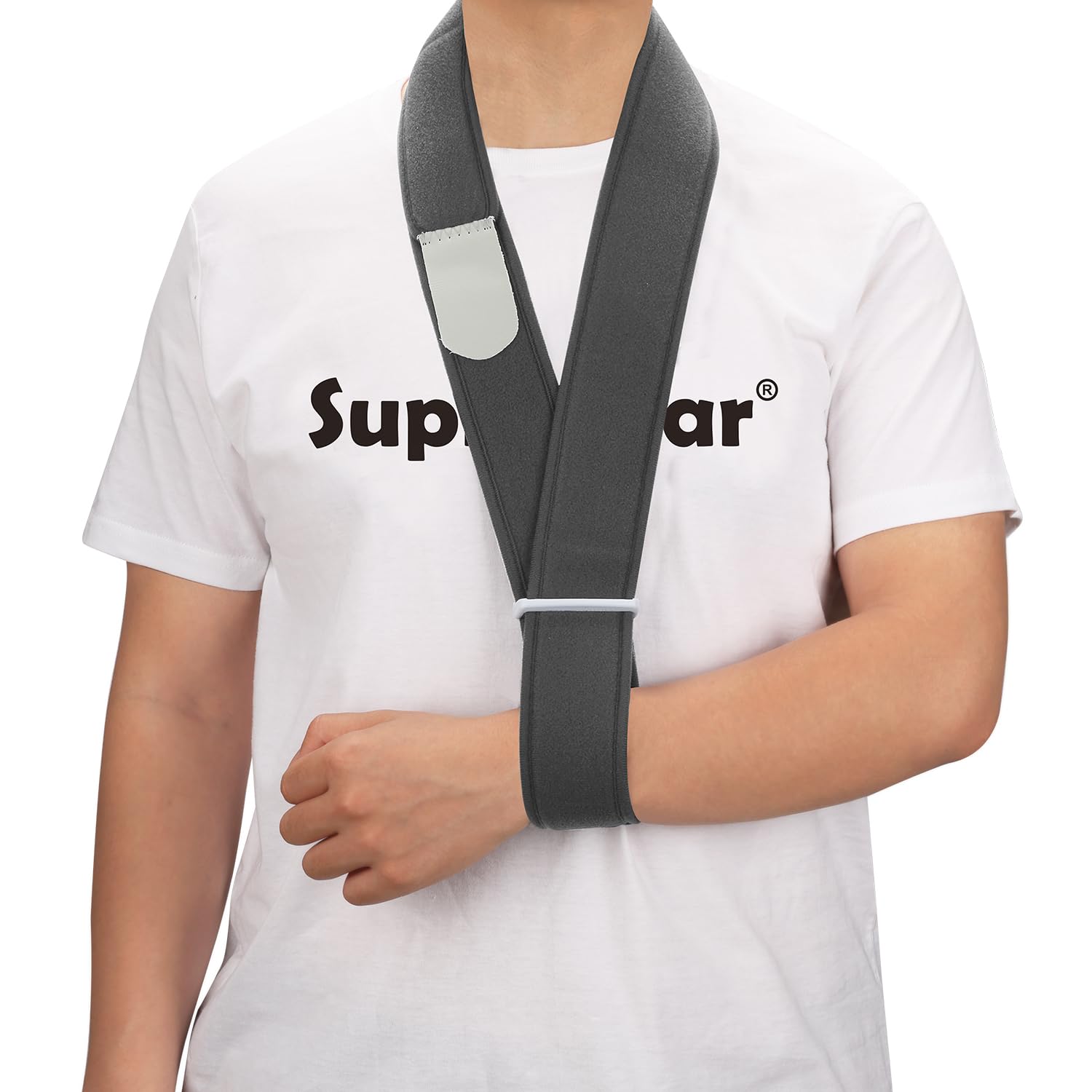
Cuff and Collar Sling
For humerus (upper arm) fractures, clavicle fractures, and shoulder injuries where the arm is allowed to hang at the side rather than be elevated.
Sizing Guide
Most cuff and collar slings are one-size-adjustable, consisting of a soft strap that loops around the neck and a cuff that supports the wrist. The wrist cuff should sit at the level of the opposite shoulder when adjusted correctly.
Tips & Tricks
Unlike a triangular sling, the cuff and collar lets the arm hang in a natural position, which uses gravity to help align certain humerus fractures. Adjust the loop length so the wrist sits at the level of the opposite shoulder. Wear at all times unless your provider says otherwise.
Common Mistakes
Lifting the elbow up like in a regular sling defeats the purpose of the cuff and collar. The arm should hang freely. A loop set too long lets the arm pull down on the neck strap and may slip off the wrist.
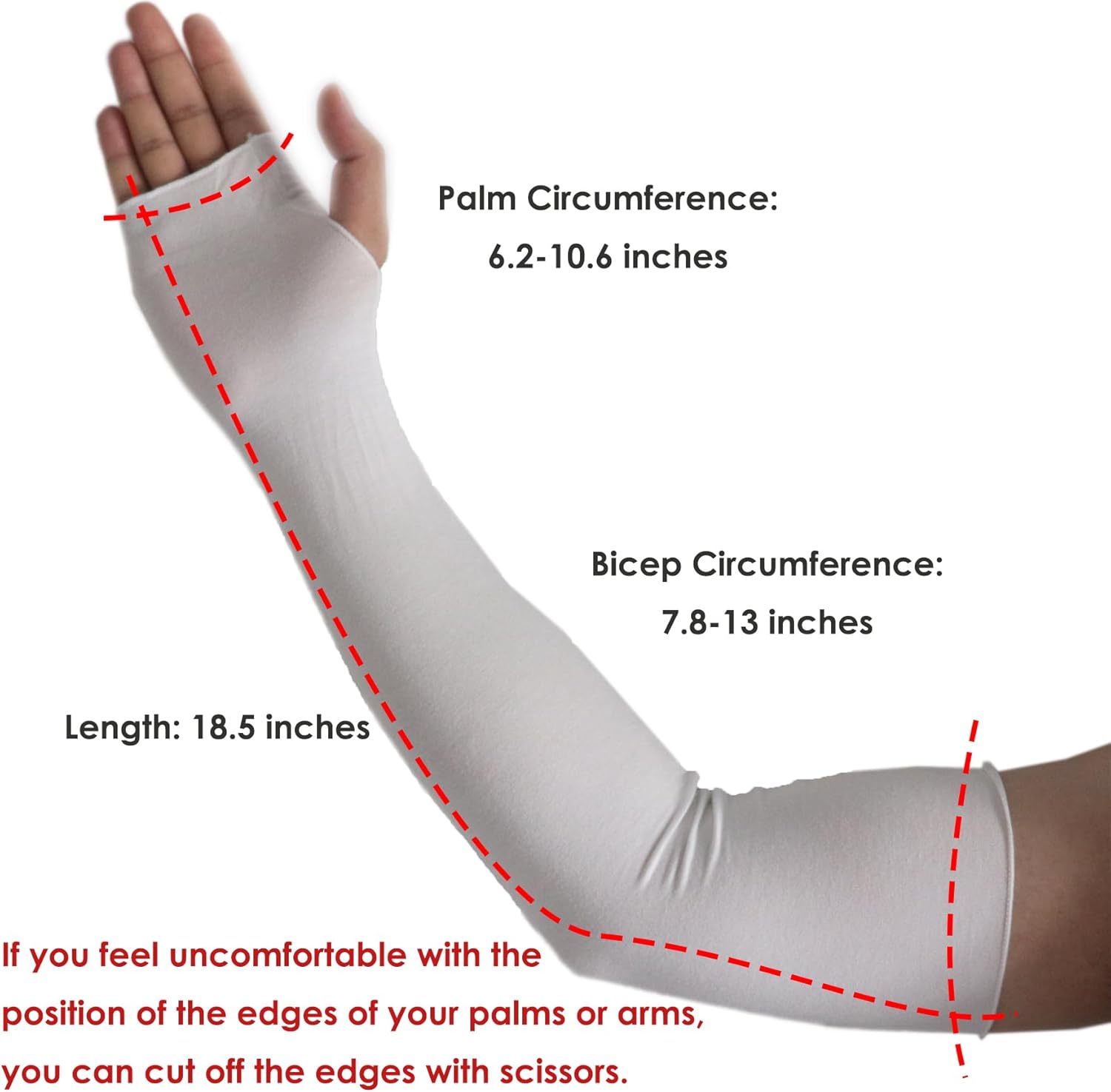
Humeral Sleeve (Fracture Sock)
For upper arm fracture support and as a comfort liner worn under a humeral fracture brace.
Sizing Guide
Humeral sleeves come in standard sizes based on upper arm circumference. Match to the manufacturer's size chart. The sleeve should cover from just below the shoulder to just above the elbow.
Tips & Tricks
Pull the sleeve onto your upper arm so it fully covers the area under your fracture brace. The sleeve wicks moisture and protects skin from the brace closures. Most patients keep one or two extra sleeves on hand so one can be washed while the other is worn.
Common Mistakes
Skipping the sleeve under a fracture brace causes skin irritation, sweat buildup, and odor. A sleeve that bunches or wrinkles under the brace creates pressure points. Smooth it flat before closing the brace.
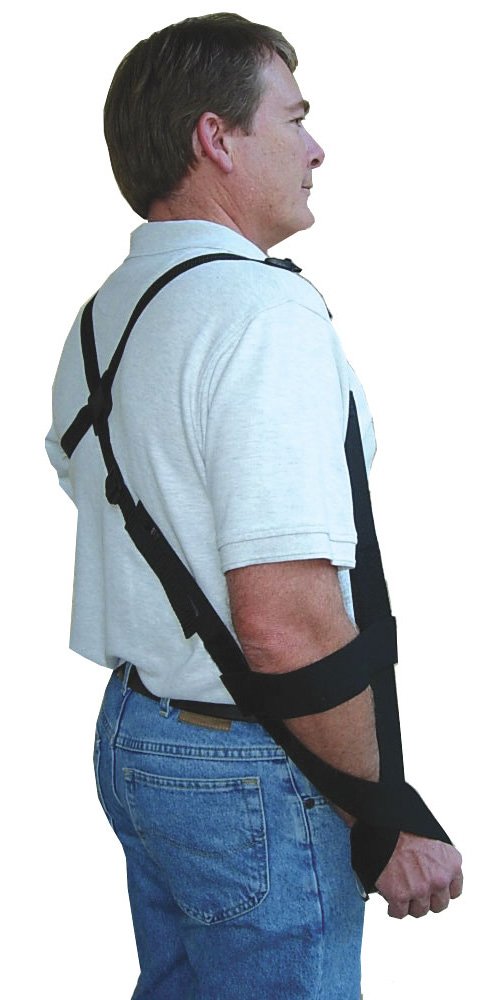
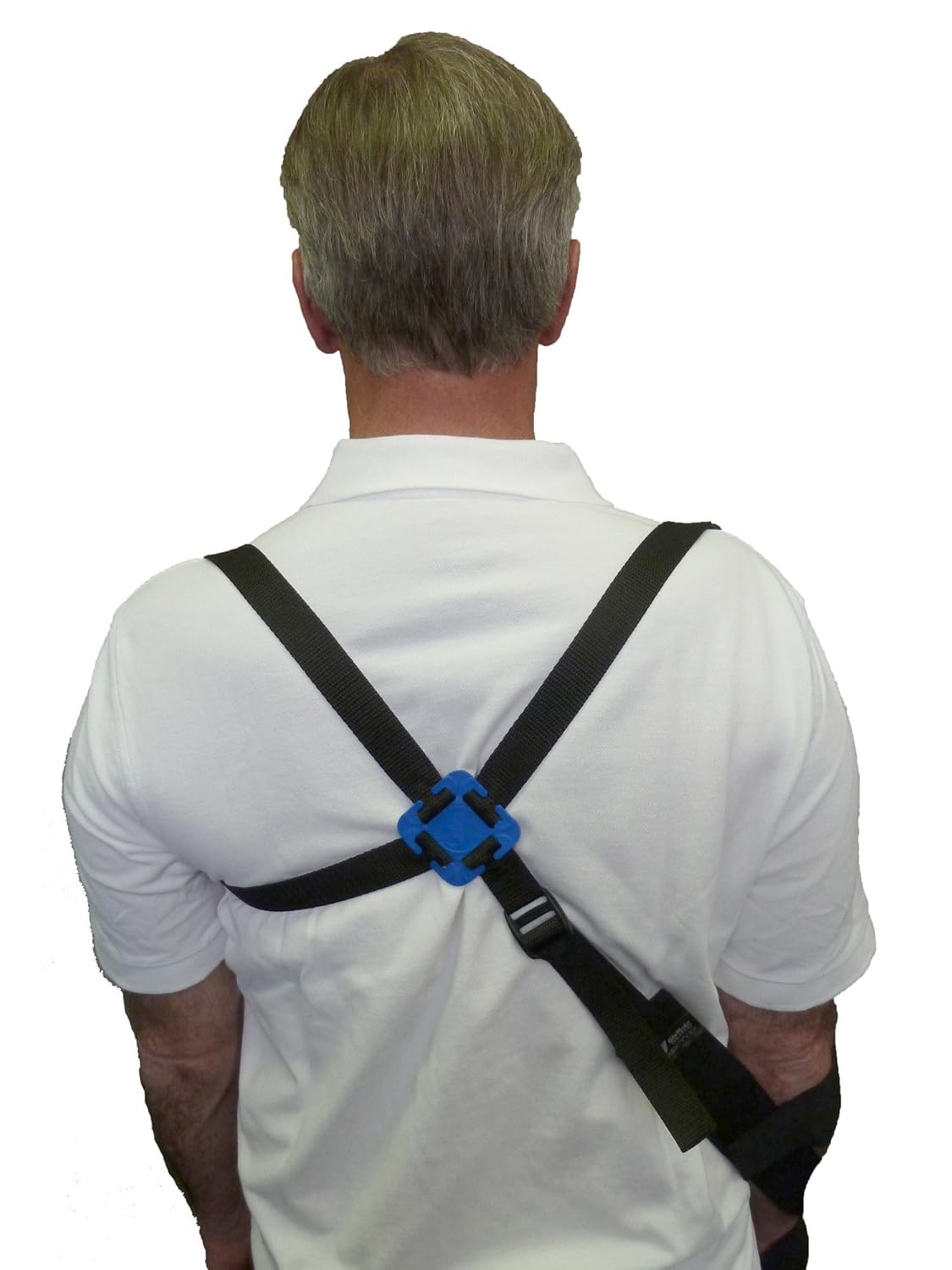
Hemi Sling (GivMohr Sling)
For stroke patients or others with shoulder subluxation (partial dislocation) from arm weakness. Supports the weight of the arm to prevent the shoulder joint from pulling apart. The GivMohr Sling is the clinic standard — it uses a weighted handpiece to drive proprioceptive input through the joint while suspending the arm.
Sizing Guide
GivMohr Slings come in S, M, L, and XL based on body height and arm length — check the manufacturer's size chart before ordering. The sling should lift the weight of the arm off the shoulder joint without forcing the elbow up; the handpiece sits in the hand and gives the joint a gentle traction load while you walk.
Tips & Tricks
A hemi sling is designed to be worn during STANDING and WALKING, when gravity pulls on a weak arm. Many patients remove it when seated with the arm supported on a pillow or armrest. The goal is to reduce shoulder pain and prevent further joint damage, not to immobilize. The GivMohr's weighted handpiece is part of the design — don't remove it.
Common Mistakes
Wearing a hemi sling continuously can lead to elbow stiffness and tight shoulder muscles. Coordinate with your therapist about when to wear it. A sling that lifts the elbow too high can pull the shoulder forward and worsen alignment. The GivMohr is not designed for arm immobilization after surgery — that's a different sling category.