Pediatric
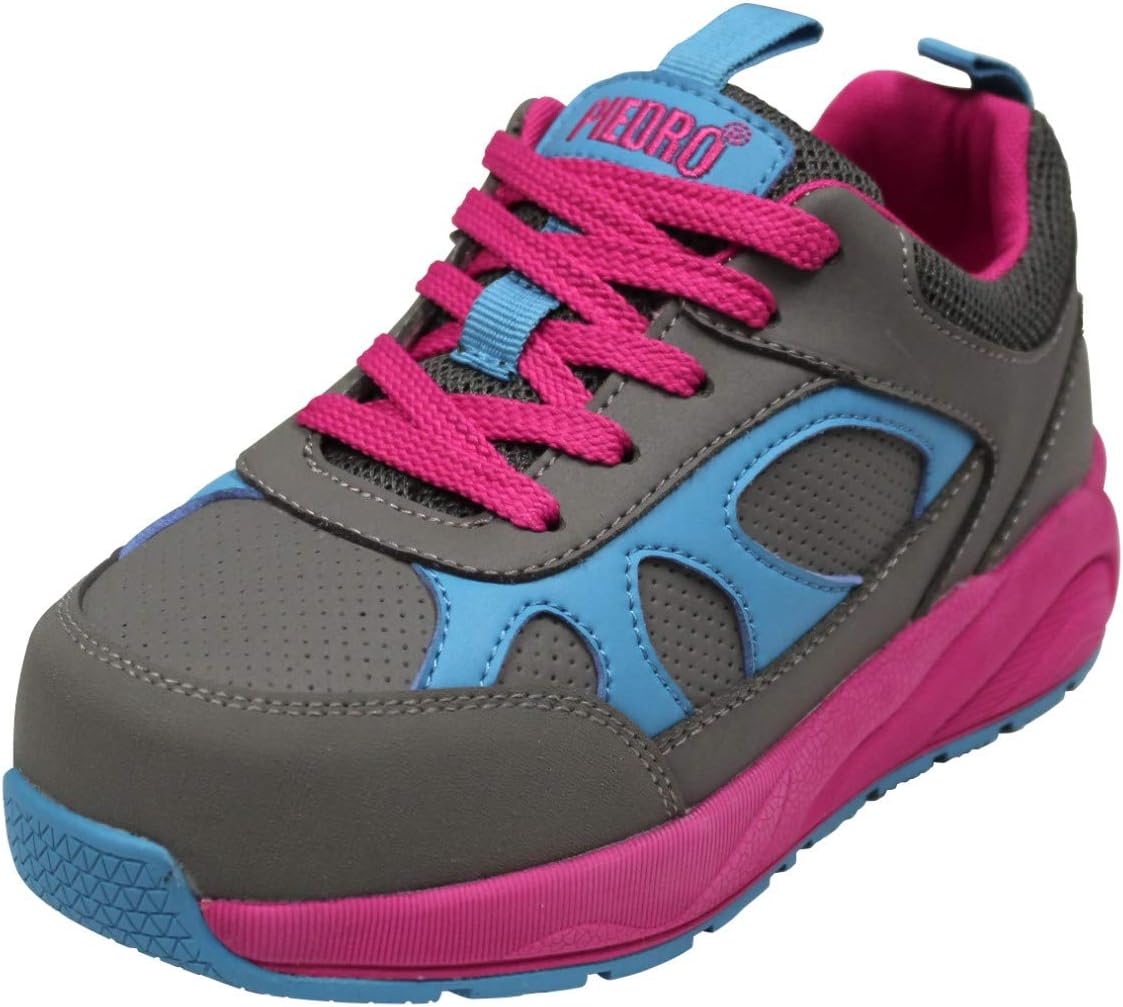
AFO & SMO-Friendly Shoes
Shoes that go on EASILY over a child's AFO, SMO, or UCBL — and stay on. The four things that matter most: an extended tongue that opens fully, a wide-and-deep toe box that accommodates the brace, a removable insole to free up internal volume, and a high enough profile to enclose the heel and ankle of the orthotic.
Sizing Guide
With AFOs or SMOs: go up about 1 full size from your child's normal size, AND look for wide or extra-wide widths. With UCBLs: regular size is usually fine — but the insole must be removable to make room for the orthotic. Always confirm wide widths exist for the specific style you want before ordering. Don't size up two or more full sizes — too-long shoes cause tripping and undo what the orthotic is trying to fix. The fix is usually wider, not longer.
Tips & Tricks
Best brands to look at:
• Billy Footwear — zipper tongue fully unzips so the shoe lays open. The Billy GOAT line comes in extra wide / extra deep widths. UCSF O&P patients: ask about the 20% Billy discount.
• Plae — wide toe box, flexible mesh, extended tongue, pull tabs for donning. A clinic favorite.
• New Balance — easy access to wide and XW widths in regular retail sizes. Zappos has a generous return policy that helps with fit trial-and-error.
• Tsukihoshi — light flexible kid shoe with a wide forefoot.
• SureStep — built specifically for AFO/SMO wearers. Higher price, but the fit is dialed in.
• Cat & Jack (Target) — budget option with lots of styles. Worth trying before splurging.
• Friendly Shoes, See Kai Run, Ikiki, Stride Rite, Vans — all worth a look depending on style.
Fitting tip: push the shoe on while rocking the heel back and forth — it helps seat the orthotic properly. If the shoe slides on too easily, try a half size down. Choose laces over Velcro when possible for a more secure fit. If Velcro straps end up too short, ask your orthotist about strap extensions.
Common Mistakes
Sizing up two or more sizes is the #1 mistake — it makes the shoe long enough to fit the brace but undermines the stability the AFO/SMO is providing. Tripping and clumsiness follow. Slip-on shoes, shoes with tight elastic laces, and any shoe without a tongue that opens are non-starters — the brace won't fit through the opening. Buying without checking the return policy is a regret-prone choice; some trial and error is normal.
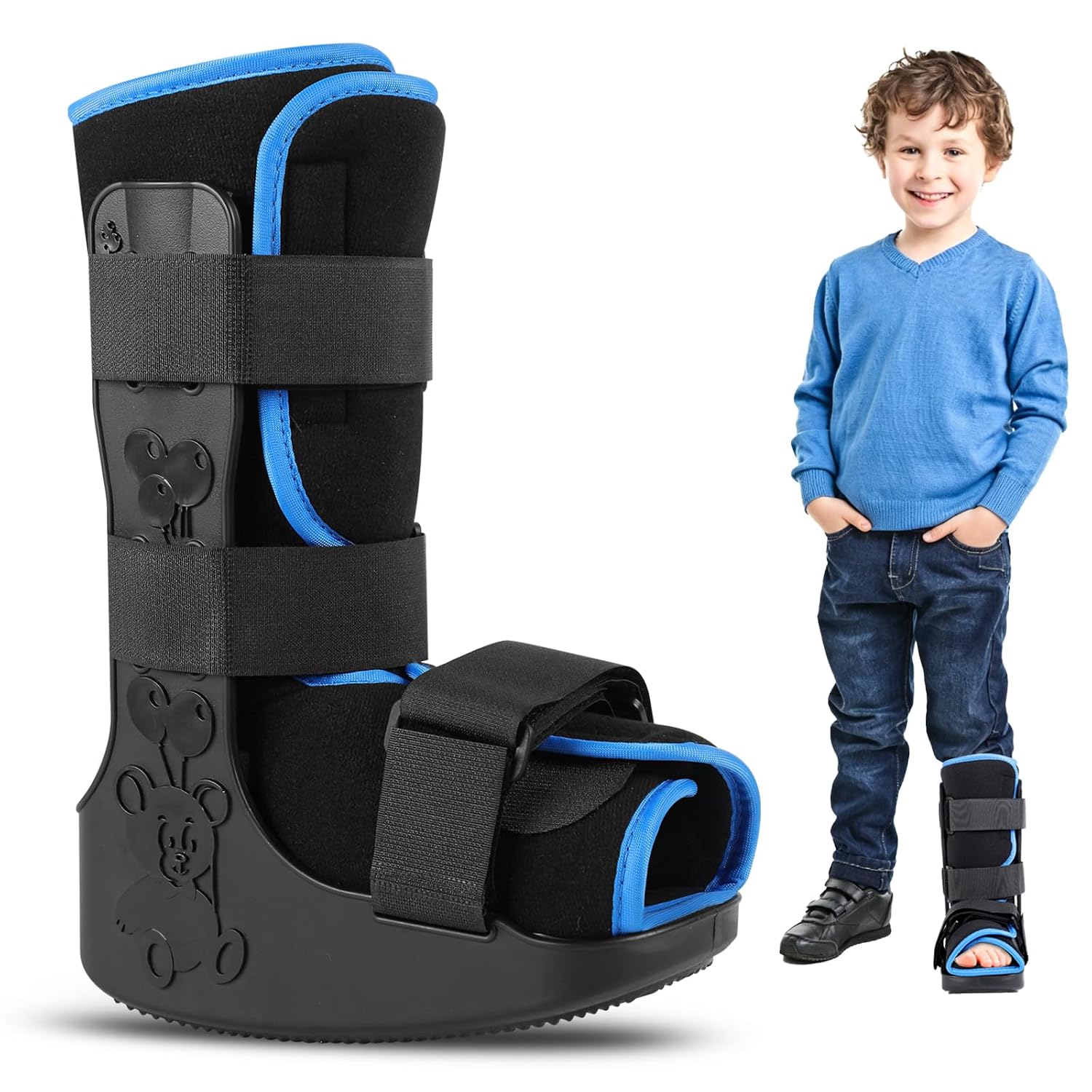
Pediatric Cam Walker Boot
A kid-sized version of the standard walking boot — for ankle sprains, foot fractures, post-op immobilization, and toe injuries in children. The rocker sole and rigid uprights restrict ankle motion while the air or foam liner cushions the limb. Sized smaller than adult boots so the boot fits the child's leg without bunching or slipping.
Sizing Guide
Pediatric cam boots typically come in Pediatric Small, Medium, and Large rather than shoe sizes. Use the manufacturer's pediatric sizing chart — measure your child's foot length and calf circumference at the largest point. The boot top should land just below the calf muscle. If the boot is too tall it will dig into the back of the knee when sitting; too short and the boot won't immobilize the ankle properly. Check whether the model has air pockets that need to be hand-pumped after donning.
Tips & Tricks
Have the child wear a tall sock that comes above the top of the boot — bare skin against the boot liner causes hot spots and chafing in active kids. The straps should be just snug enough that a finger fits between strap and boot — kids' legs change throughout the day. Check the boot's lift sole height — if it's noticeably taller than the child's regular shoe on the other foot, ask the orthotist for a shoe lift on the opposite side to even out hip alignment.
Common Mistakes
Buying an adult small instead of a true pediatric size is the most common error — the calf height is wrong, the liner is too loose, and the boot can come off. Putting the boot on bare skin is the second most common — always use a long sock or a brace sock. Skipping the air-pump step (on inflatable models) leaves the limb loose inside the shell, which negates the immobilization. Letting the child run or jump in the boot is not what it's designed for; reach out to the orthopedist if pain or instability persists.
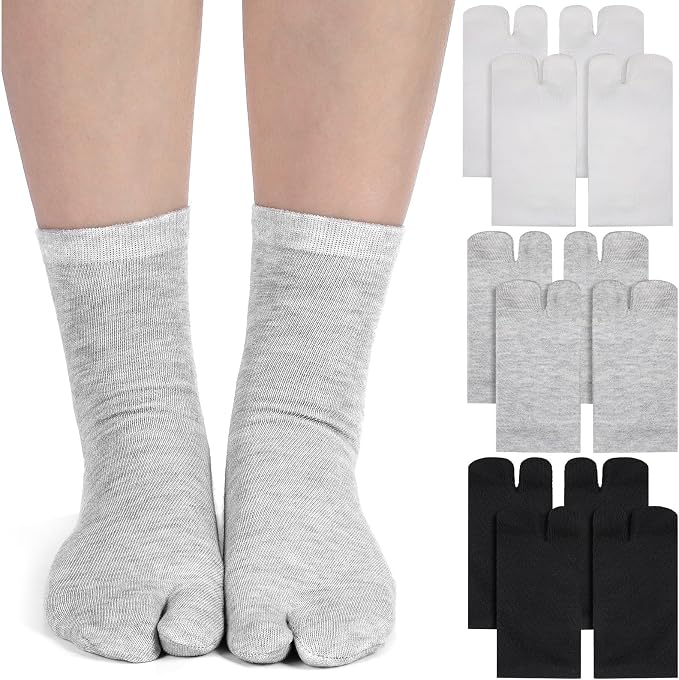
AFO Toe-Strap Socks (Big-Toe Separated)
Tabi-style socks with a separate compartment for the big toe — designed for kids whose AFO uses a toe strap that runs BETWEEN the big toe and the second toe. Without a separated big-toe sock, the regular sock fabric bunches under the strap and causes blisters or pressure sores.
Sizing Guide
Match the sock to the child's shoe size — most tabi socks come in toddler, kid, and youth size ranges. Sock height is important: the sock needs to come HIGHER than the top of the AFO or SMO so there's no bare-skin contact with the plastic. Tube-knit construction (no seams across the toes or heel) prevents irritation, especially for children with sensory sensitivities. Moisture-wicking fabric (bamboo, merino blend, polyester blend) prevents the cotton-stays-wet problem that leads to blisters.
Tips & Tricks
Have at least 5-7 pairs in rotation so a wash day doesn't become a barefoot-in-AFO day. The big-toe pocket is small — for kids with longer toes, look for stretchy yarn rather than ribbed yarn. SureStep makes purpose-built AFO socks; standard Japanese tabi socks also work and tend to be less expensive. Knee-high length is the safest default for tall AFOs; ankle-length tabis can work for SMOs and UCBLs.
Common Mistakes
Using a regular sock with an AFO toe strap is the most common cause of toe blisters in pediatric AFO patients — the strap pinches the sock fabric down between toes. Cotton socks trap moisture against the skin and cause maceration. Socks that are too big bunch up inside the AFO and create pressure points. Socks that don't come high enough leave bare skin against the plastic, which abrades over the course of a day.
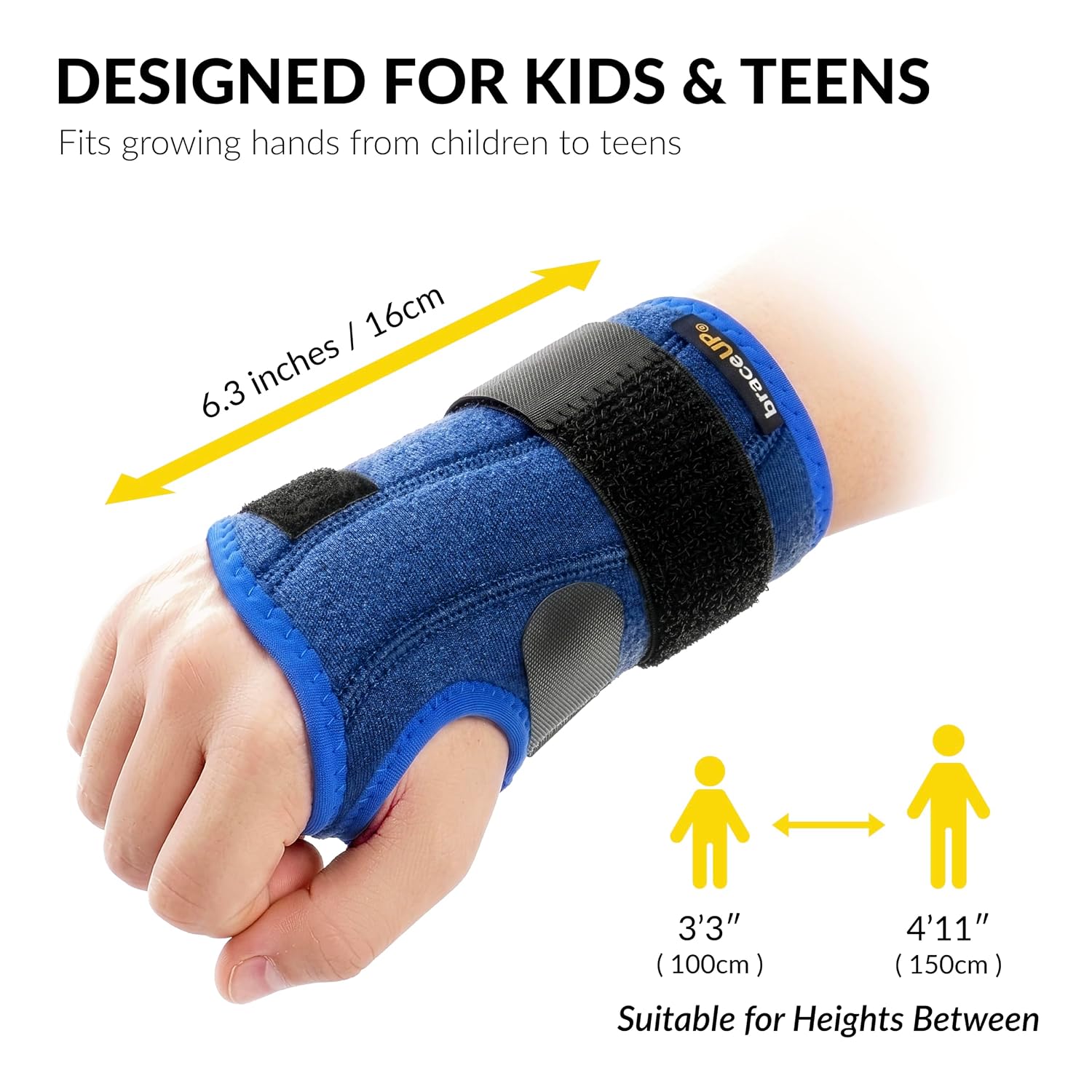
Pediatric Wrist Splint
A kid-sized wrist immobilizer for sprains, mild fractures, growth-plate injuries, post-cast support, and gymnastics or skateboarding-related strains. Sized down from adult wrist splints to fit a child's smaller forearm so the splint actually controls the wrist instead of sliding around.
Sizing Guide
Pediatric wrist splints come in toddler, child, and youth sizes — measure the circumference of the child's wrist at the smallest point and the forearm at the widest point, then match to the manufacturer's chart. The splint should extend from the base of the fingers (without restricting finger motion) to about two-thirds of the way up the forearm. A removable metal stay on the palm side immobilizes the wrist in a neutral or slightly extended position. Pick left, right, or universal — most pediatric models are universal-fit.
Tips & Tricks
Have the child wear a thin sock or stockinette underneath if the splint material irritates skin. Tighten straps from distal to proximal (closest-to-hand strap first, then up the arm) — that anchors the splint position before the higher straps lock in. For overnight use, loosen the straps about half a turn to allow for swelling. Kids will pick at the Velcro — point out that loose straps mean the splint isn't doing its job.
Common Mistakes
Using an adult small instead of a true pediatric size is the biggest issue — adult-small is still too long for most kids under 10 and will block elbow motion. Splints worn too loose don't immobilize anything; too tight and the fingers turn white or numb. Check for numbness or color change in the fingertips at least every hour after first putting it on. If the splint is for a fracture, do not adjust it without checking with the orthopedist first.