Elbow Braces
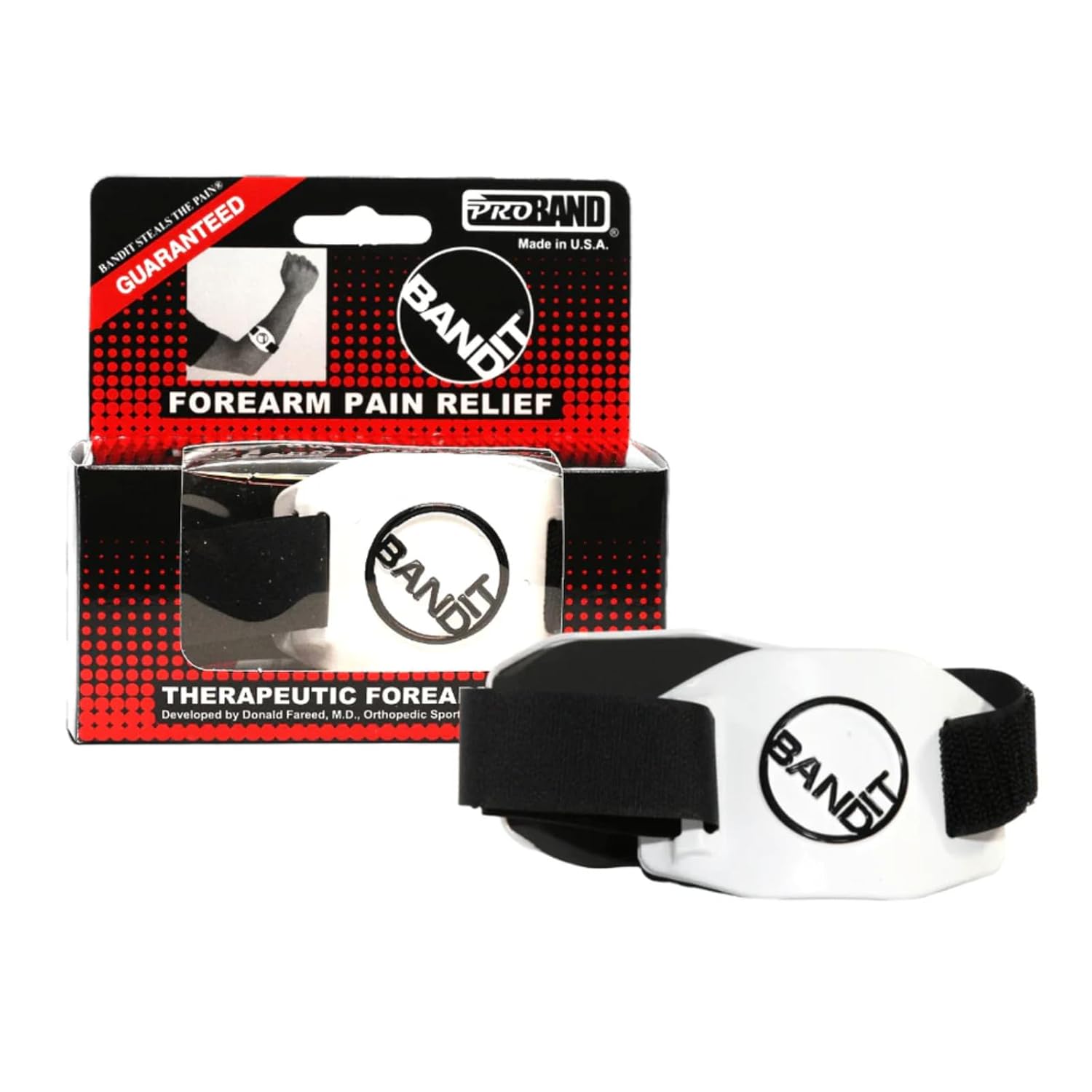
BandIt Therapeutic Forearm Band (Tennis / Golfer's Elbow)
For lateral epicondylitis (tennis elbow), medial epicondylitis (golfer's elbow), and forearm tendon overuse pain. The BandIt has a small rigid plastic pad — not a soft elastic strap — that delivers focal pressure directly over the muscle-tendon insertion. That's the design that actually addresses the mechanism of injury: it absorbs the initial shock of muscle contraction and converts a sharp impulse load on the inflamed tendon into a more dynamic, distributed load. Generic circumferential straps just squeeze the whole forearm and don't deliver the focal compression that matters.
Sizing Guide
One-size-adjustable with a hook-and-loop closure. The band sits about 1 to 2 inches below the elbow crease, over the forearm muscle belly. The rigid contact piece should land directly on the meatiest part of the muscle.
Tips & Tricks
Position the rigid pad over the muscle on the OUTER forearm for tennis elbow, or the INNER forearm for golfer's elbow. The plastic shock-absorber is the working part — it must sit over the muscle belly, not over the elbow joint or the bony epicondyle. Tighten until firm but not painful (one finger should slide under the strap). Wear during the activity that aggravates the pain — not all day. Also more comfortable than soft straps for long sessions because the rigid pad doesn't dig in the way pulled-tight elastic does.
Common Mistakes
Buying a soft elastic counterforce strap and expecting the same result is the #1 mistake — soft circumferential compression doesn't address the mechanism that drives epicondylitis. Positioning the pad over the elbow joint instead of the muscle belly negates the design. Tightening too aggressively cuts off circulation and can cause numbness in the hand. All-day wear isn't necessary and causes skin irritation.

Hinged Elbow Brace (Ligament Support)
For elbow instability, ligament injuries (UCL, RCL), and post-injury support requiring lateral reinforcement.
Sizing Guide
Measure forearm circumference 2 inches below the elbow crease. Match to the manufacturer's size chart. The hinges should align with the center of your elbow joint on both sides.
Tips & Tricks
Wrap the brace around the elbow with the hinges centered on the joint line. Adjust straps so the brace feels secure without sliding. Wearing a thin sleeve underneath helps prevent skin irritation.
Common Mistakes
Hinges that sit above or below the joint line will bind when you bend the elbow. Take time to position the hinges over the joint before tightening straps.
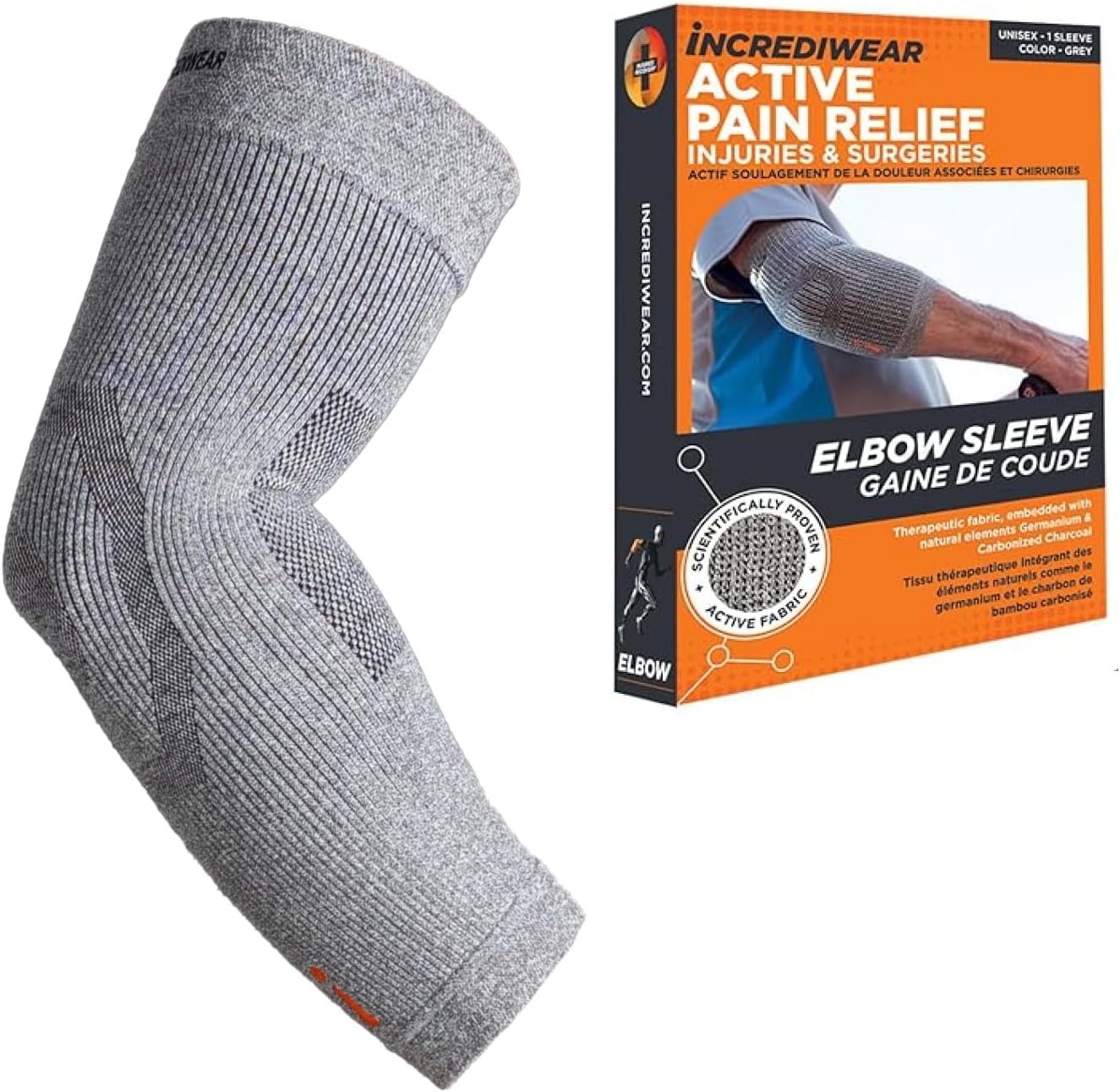
Elbow Compression Sleeve (Incrediwear)
For mild elbow swelling, general support during activity, arthritis discomfort, and lingering tendonitis flare-ups. Incrediwear's fabric uses semiconductor-element fibers (germanium, carbon) that are designed to increase blood flow under the sleeve — a different mechanism than plain compression, which is why patients often report better recovery and lower next-day soreness compared to a generic neoprene sleeve.
Sizing Guide
Measure forearm circumference about 2 inches below the elbow crease and match to the Incrediwear size chart (S/M/L/XL). The sleeve should feel snug like compression wear but not cut in. If you see skin bulging above or below the sleeve, size up. Same sleeve fits left or right.
Tips & Tricks
Roll the sleeve on from the wrist up rather than pulling it onto the elbow — that avoids overstretching the fabric and wearing out the elastic. Position the sleeve centered over the elbow joint. Unlike most compression sleeves, Incrediwear is comfortable enough to wear during sleep and the blood-flow-promoting effect benefits from longer wear. Hand wash and air dry to extend the life of the semiconductor fibers.
Common Mistakes
Buying a sleeve that's too tight restricts circulation and can cause swelling below the elbow. Throwing it in the dryer degrades the fabric — air dry only. This sleeve is for general support and recovery; for actual tennis or golfer's elbow, the BandIt counterforce brace above is the right tool because it delivers focal pressure over the muscle insertion.
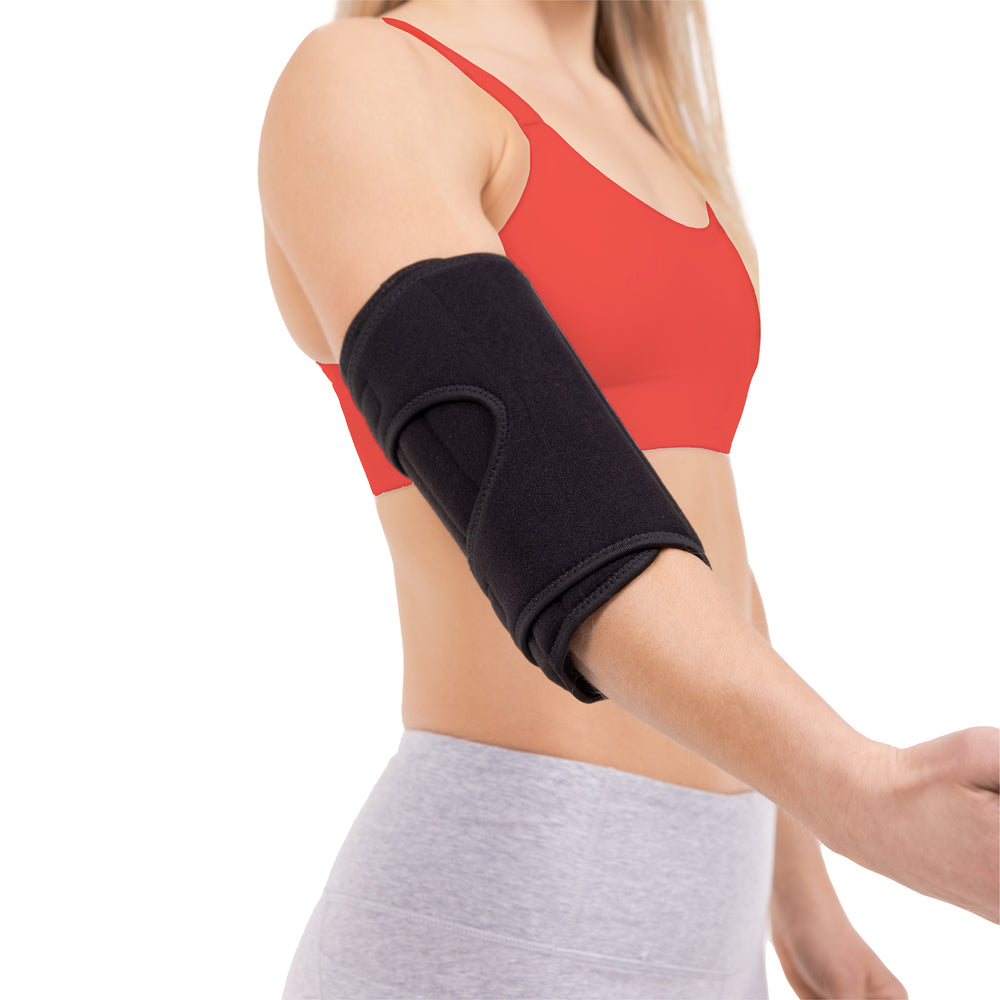
Cubital Tunnel Night Splint
For cubital tunnel syndrome, ulnar nerve irritation, and nighttime numbness or tingling in the ring and pinky fingers.
Sizing Guide
Most cubital tunnel splints come in sizes based on forearm circumference. Some are one-size-adjustable. The splint should hold the elbow at about 30 to 45 degrees of bend (nearly straight).
Tips & Tricks
Wear the splint at night while sleeping. The goal is to keep the elbow from bending too much, which compresses the ulnar nerve. Soft, padded versions are usually more comfortable for long-term overnight wear than rigid versions.
Common Mistakes
A splint that holds the elbow too straight can be uncomfortable. A splint that allows too much bending defeats the purpose. The fit should keep the elbow gently extended without forcing it.
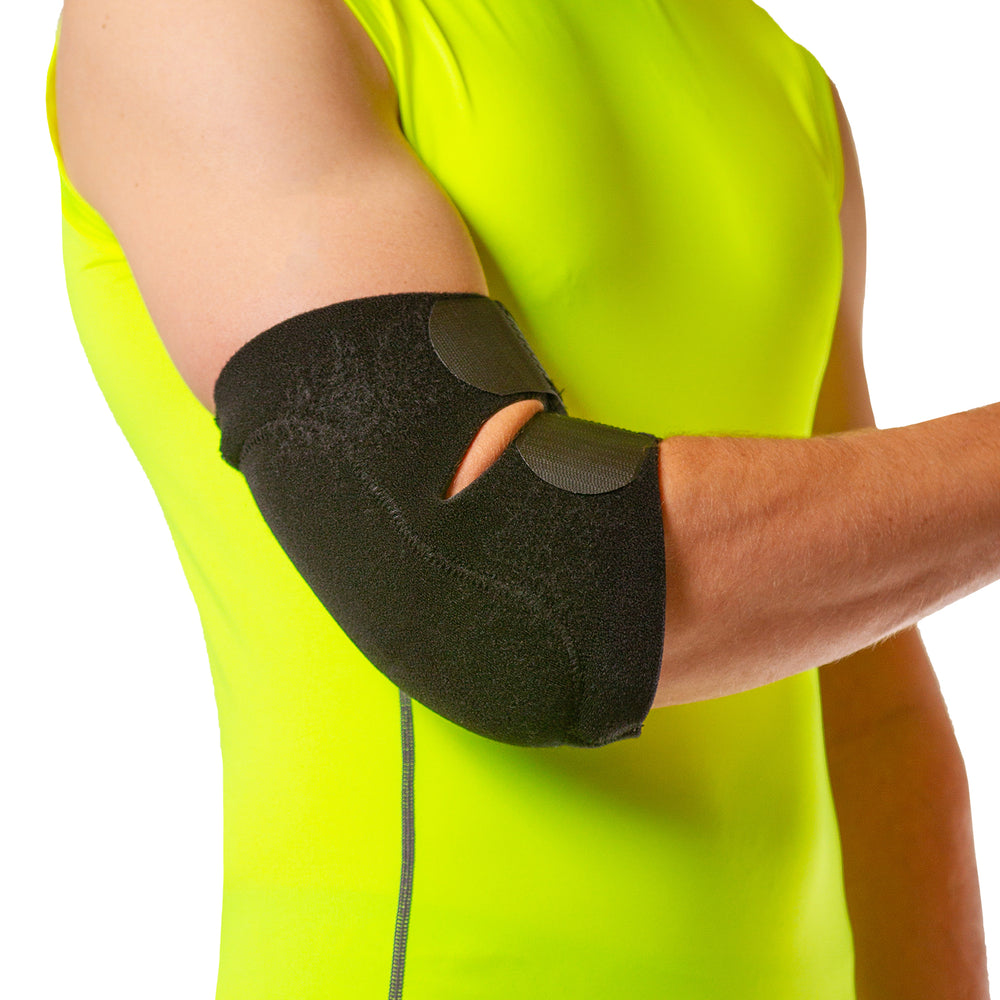
Gel-Padded Elbow Sleeve
For olecranon bursitis ("student's elbow"), bony prominence padding, and protection for those who lean on their elbows often.
Sizing Guide
Measure forearm circumference 2 inches below the elbow. Match to the manufacturer's size chart. The gel pad should sit directly over the bony tip of the elbow.
Tips & Tricks
Wear during activities that put pressure on the elbow tip, like resting on a desk or contact sports. The gel cushion absorbs impact and reduces friction. Hand-wash and air-dry to preserve the gel.
Common Mistakes
The gel pad must be positioned over the boniest part of the elbow. If it shifts off-center, the protective effect is lost. A sleeve that is too tight can cause numbness in the hand.
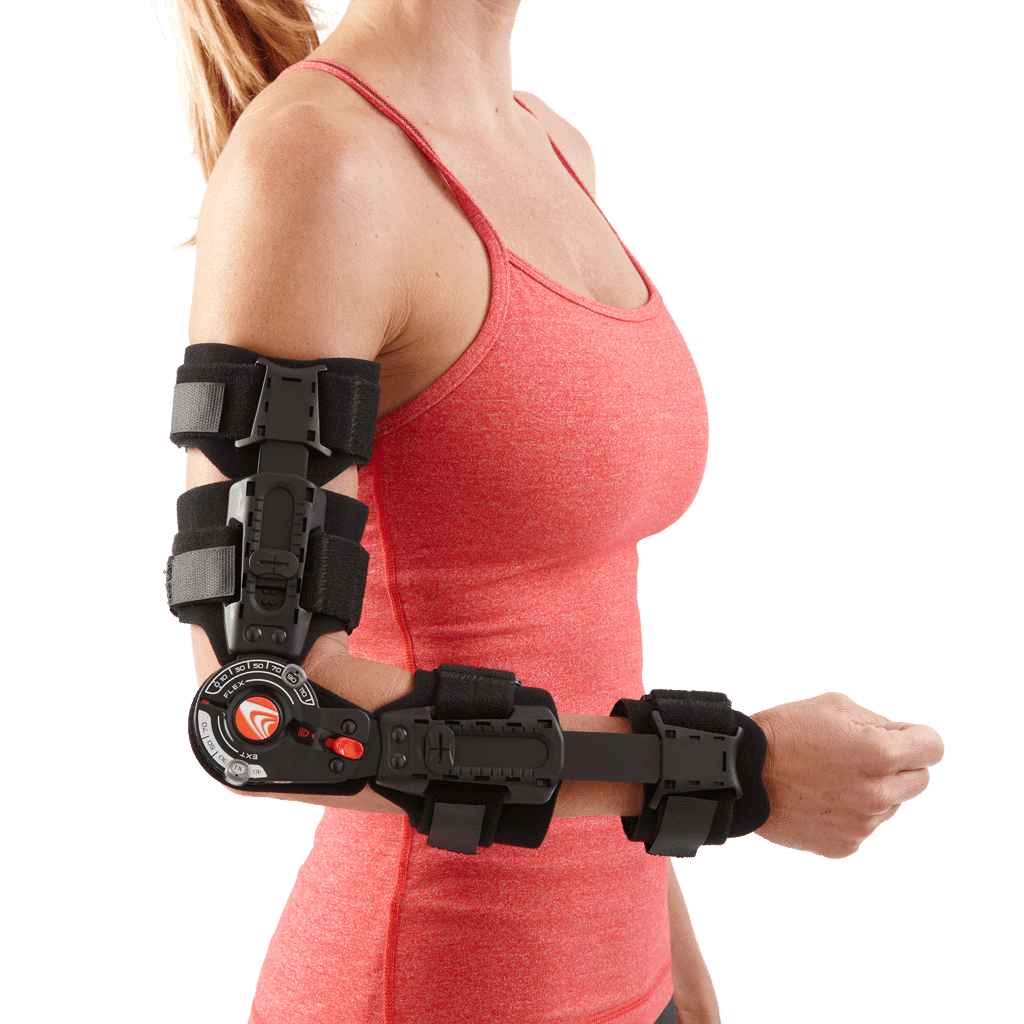
Elbow T-Scope (Range-of-Motion Brace)
For post-surgical or post-fracture rehabilitation requiring controlled range of motion at the elbow.
Sizing Guide
Elbow T-Scope braces are typically one-size-adjustable with telescoping bars. Adjust the length so the hinge aligns with your elbow joint center. Follow your surgical team's instructions for range-of-motion settings.
Tips & Tricks
Your surgeon or therapist will set the allowed range of motion. Do not adjust the ROM settings yourself unless instructed. The brace should be snug but allow comfortable wear throughout the day. Check strap tension regularly as swelling changes.
Common Mistakes
Changing the range-of-motion settings without your surgeon's guidance can compromise your recovery. Straps that are too loose allow the brace to shift and the hinge to misalign with your elbow.

Mayo Elbow Brace (Static-Adjustable Stretch)
For elbow contractures, post-surgical recovery (fracture dislocations, bicep/tricep tendon ruptures, ulnar nerve transposition, total elbow arthroplasty, ligament repairs), and stretching out stiff elbows where a small daily change in angle is needed. Allows immobilization, controlled static stretch, or free motion modes.
Sizing Guide
Universal size, available for left or right arm. The Aircast 05EL (left) and 05ER (right) models fit most adults. Pick the side that matches your injured arm.
Tips & Tricks
The Mayo Elbow Brace differs from an Elbow T-Scope: instead of adjustable range-of-motion limits, it uses a control knob and adjustable hinge for static stretch — your provider sets the angle, and you gradually progress the stretch over days or weeks. Aircell strapping cushions the arm. Use the static stretch mode to slowly increase elbow extension or flexion as tissues heal.
Common Mistakes
Adjusting the stretch angle on your own without provider guidance can re-injure the joint. Confusing this brace with an Elbow T-Scope is common — the T-Scope is for active ROM-controlled rehab; the Mayo brace is for slow, static contracture release. Be sure you have the side (left or right) that matches your injured arm.
This brace is typically dispensed through orthopedic clinics or DME suppliers, not consumer Amazon. If your provider has prescribed it, ask the clinic about ordering through their supplier.
Browse Aircast braces at DonJoy Store →